

Content
A single leaking tube joint inside a pharmaceutical heat exchanger can send cooling water into a product line, or allow product to bleed into a utility loop. By the time the contamination is noticed, the batch is already at risk and the root cause is often difficult to trace. The double tubesheet—also called the double tube plate—design exists to make this failure mode impossible to ignore.
The short version: double tubesheet heat exchangers are the most reliable barrier against cross-contamination in shell-and-tube heat transfer. Any facility producing water for injection, sterile intermediates, or final drug products should specify them wherever a leak could compromise the process or the patient.
What Is a Double Tubesheet Heat Exchanger?
In a conventional shell-and-tube exchanger, a single tubesheet at each end of the bundle does two jobs at once: it holds the tubes in position and it forms the dividing wall between the shell-side fluid and the tube-side fluid. That means one failed weld or tube joint is all it takes for the two process streams to meet. To see why this matters in practice, it helps to review how a heat exchanger works and which components carry the integrity burden.
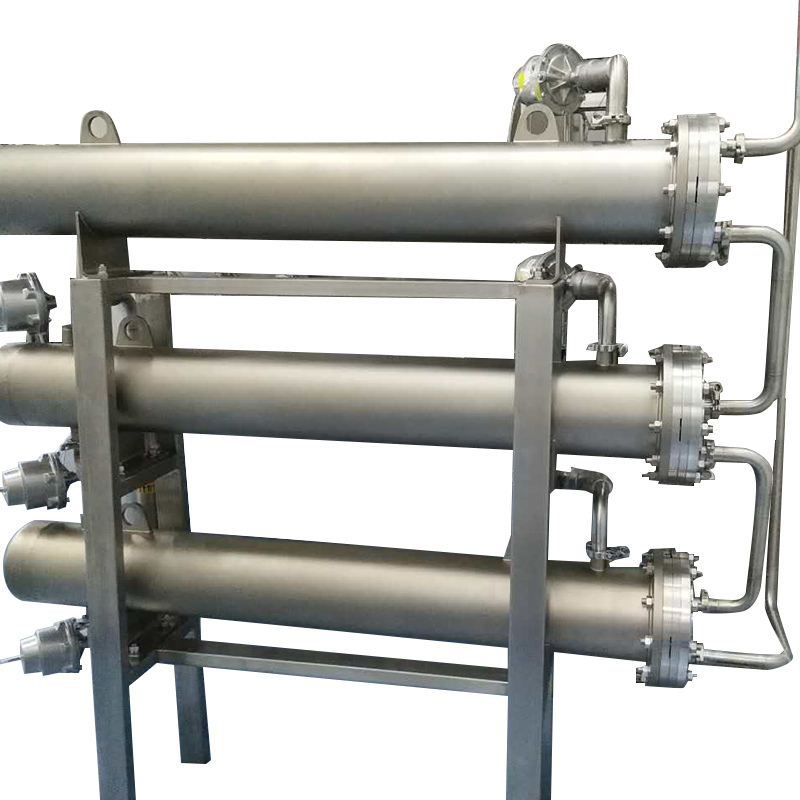
A double tubesheet unit separates those functions. Two independent tube sheets are installed at each end of the bundle. The tubes are welded into the inner tubesheet, while the outer tubesheet supports the channel cover. Between the two sheets there is a narrow annular space, vented to atmosphere or connected to a leak-detection drain. If the primary tube-to-tubesheet seal begins to fail, the escaping fluid flows into this intermediate space and shows up during a routine inspection, instead of passing into the opposite fluid stream.
The design therefore provides a second, verifiable barrier. For process engineers the practical benefit is clear: the exchanger gives observable evidence that mechanical integrity has been lost before any cross-contamination can occur.
Why Cross-Contamination Protection Is Non-Negotiable in Pharma
Pharmaceutical plants operate under GMP, and GMP begins with the principle that equipment must be designed to prevent contamination rather than merely detect it later. This is not a theoretical concern; sterile pharmaceutical and biotech production is judged on these failure modes during audits and inspections. A heat exchanger that allows the two sides to mix creates consequences that spread well beyond the immediate batch:
- Water for injection must remain within strict bioburden and endotoxin limits. A leak from the cooling side can introduce micro-organisms or chemical impurities into the whole loop.
- Sterile drug products and biotech intermediates cannot tolerate contact with a non-sterile utility, even for a short moment.
- Cleaning chemicals used in CIP circuits can damage an entire product batch if they migrate through a faulty tube joint in the wrong direction.
The exchanger's position in the process is also defined by regulation: any component that touches the product stream is a product-contact surface and must be designed, installed, and maintained to keep the product safe. A double tubesheet construction is one of the accepted engineering controls for meeting that obligation in shell-and-tube equipment, because it turns an internal, hidden failure into an external, visible one.
Where Double Tubesheet Exchangers Are Used
Double tubesheet exchangers appear in every part of the pharmaceutical plant where a leak would be costly. Four duties cover most installations:
WFI and purified water loops
WFI loops are normally held at elevated temperature to suppress microbial growth, yet many unit operations require cooled water. Cooling a hot WFI loop with a single-tubesheet unit exposes the entire loop to the risk that cooling water could enter the product stream through a failed joint. Double tubesheet exchangers are the conventional choice for WFI and purified water cooling duties, including cold WFI systems, because they keep two water qualities reliably apart.
Point-of-use cooling
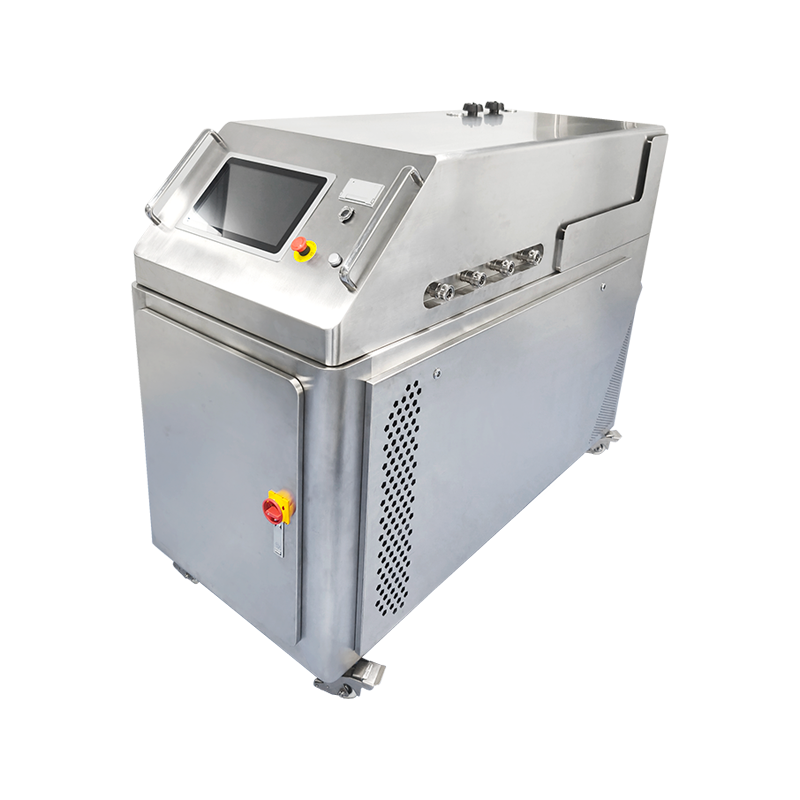
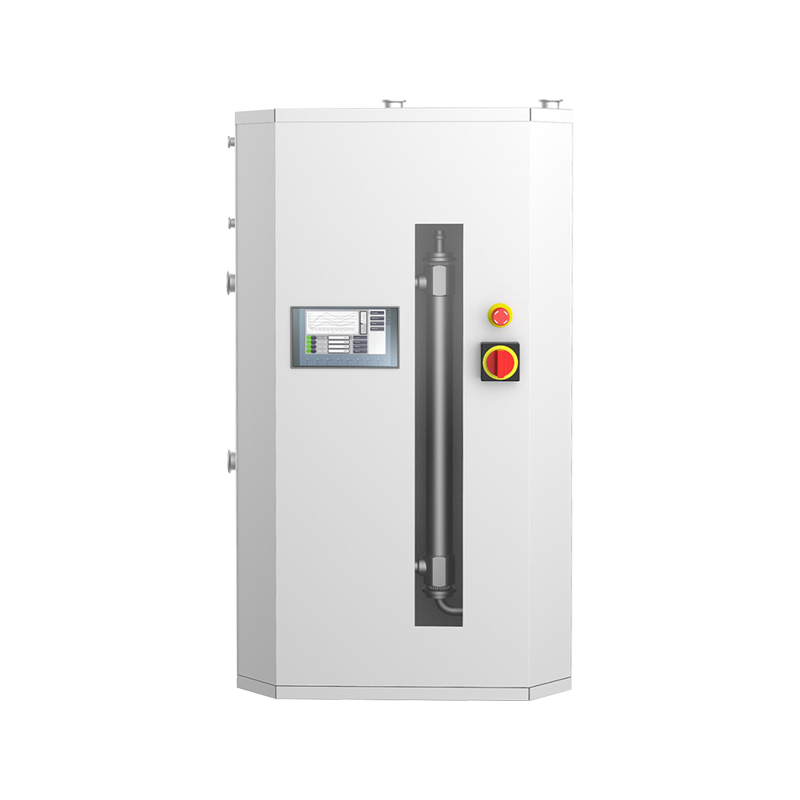
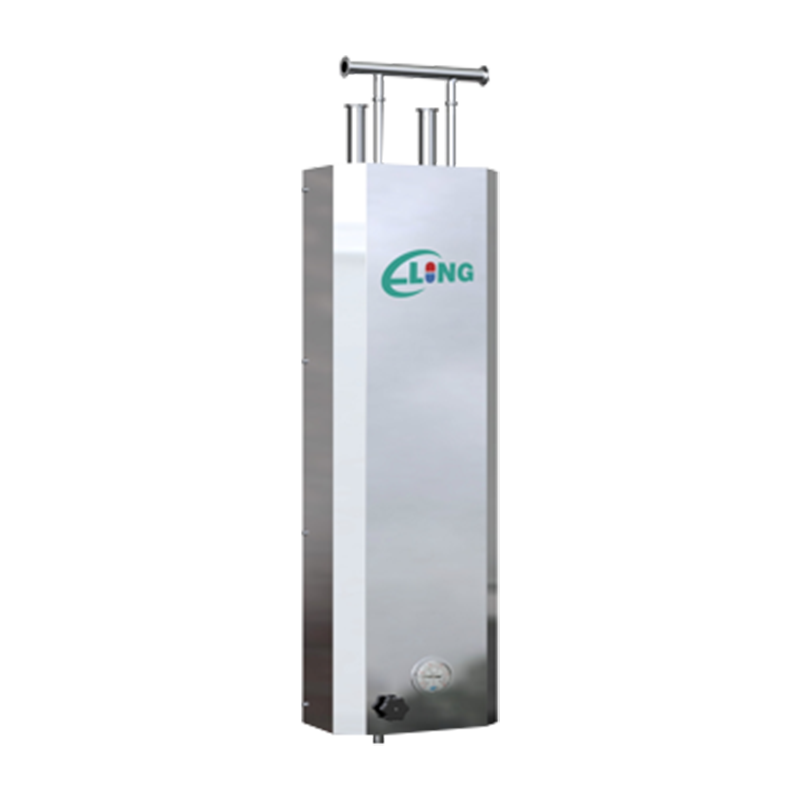
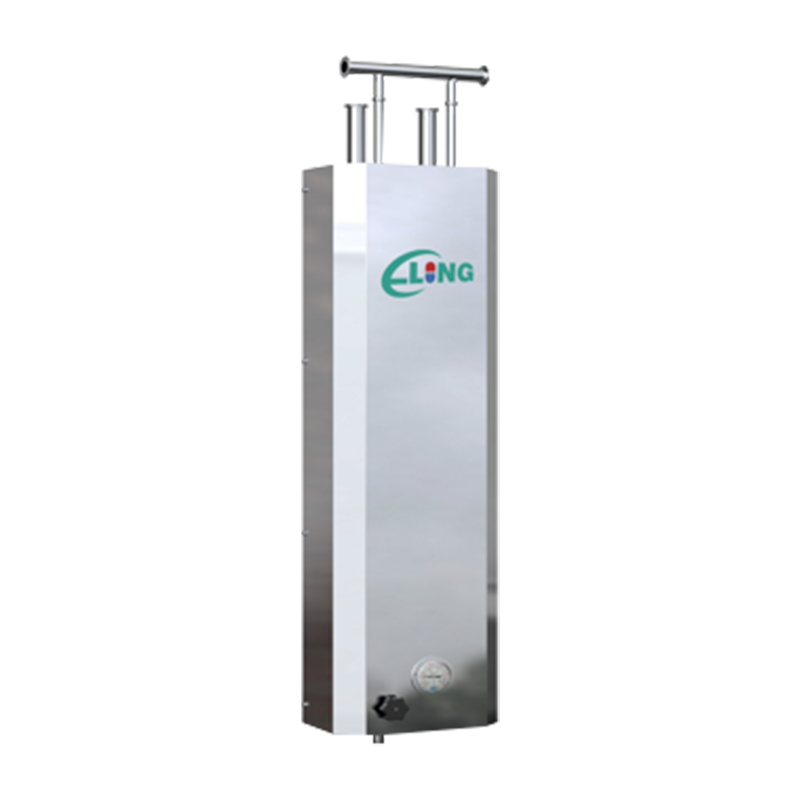
Rather than cooling an entire distribution loop, a point-of-use cooler chills only the water volume withdrawn at the moment of use, which is common at filling lines, autoclaves, and preparation tanks. Because this water goes straight into a process step, the final barrier must be trustworthy. A double tubesheet cooler ensures that the cooling medium cannot reach the water, which is why ELING offers a point-of-use cooling system built on this principle.
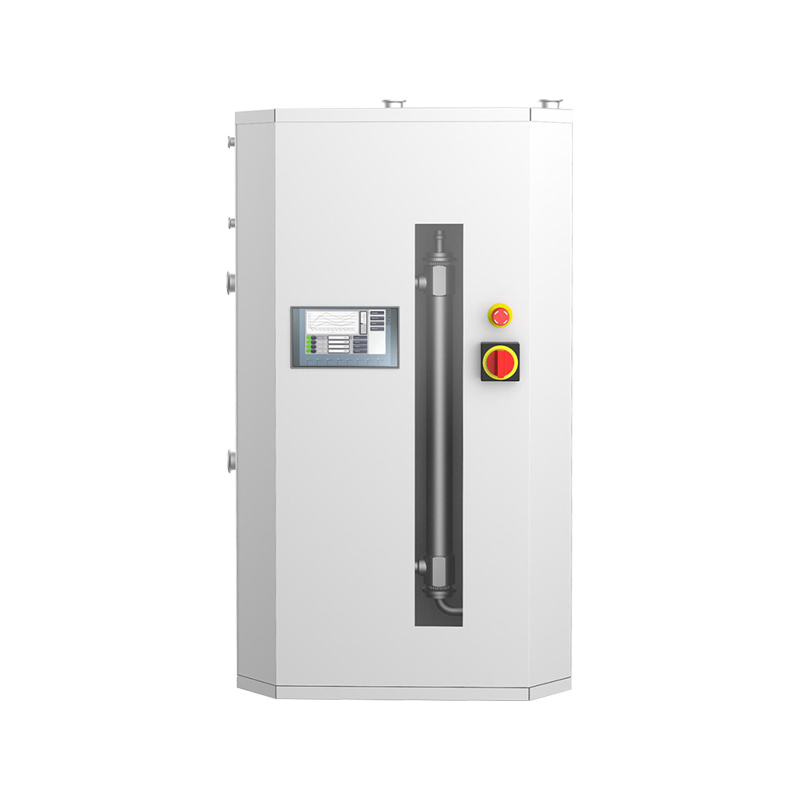 Point-Of-Use System POU Heat Exchanger Suppliers, CompanyShanghai Yiling Fluid Machinery Equipment Co., Ltd is China Custom Point-Of-Use System POU Heat Exchanger Suppliers and Point-Of-Use Syst...View Product →
CIP and SIP utilities
Cleaning-in-place and sterilization-in-place circuits heat cleaning solutions, generate steam, and cool rinse water. These systems alternate between aggressive chemicals and high-temperature steam, and they often connect to multiple process vessels. Double tubesheet exchangers reduce the chance that cleaning agent or utility water migrates into equipment that will later hold product.
Product heating and cooling in sterile processes
Biologics, vaccines, buffers, and sterile intermediates frequently need rapid heating or cooling while remaining fully enclosed. When the exchanger sits directly in the product path, the double tubesheet design protects both the product and the patient. It also simplifies root-cause investigation, because the vented intermediate space gives inspectors a defined place to check first.
Double Tubesheet vs. Single Tubesheet: When Is It Required?
Not every pharmaceutical exchanger needs a double tubesheet. The decision depends on the consequence of a leak, not on the word "pharma-grade." Asking whether the duty is product-contact, utility-contact, or a utility-to-utility heat recovery is the fastest way to reach a defensible specification. The table below summarises the typical industry logic:
| Duty | Consequence of a leak | Typical specification |
|---|---|---|
| Product-contact heating or cooling | Direct contamination of the product | Double tubesheet |
| WFI or purified water cooling | Loss of loop purity | Double tubesheet |
| CIP solution heating | Cleaning chemical may contact product | Double tubesheet |
| Utility-to-utility heat recovery | No contact with product | Single tubesheet often acceptable |
For smaller flow rates and high-purity duties, a tube-in-tube design offers an alternative: the product flows through a fully welded inner tube while the utility flows around it, so the two streams stay physically separated along the entire length of the unit. That is why ELING also offers tube-in-tube heat exchangers for applications where a shell-and-tube layout is not the best fit.
 Tube-In-Tube Heat Exchangers Suppliers, CompanyShanghai Yiling Fluid Machinery Equipment Co., Ltd is China Custom Tube-In-Tube Heat Exchangers Suppliers and Tube-In-Tube Heat Exchanger...View Product →
Materials, Finishes, and Mechanical Details
Regardless of the tubesheet arrangement, pharmaceutical duty demands certain baseline qualities. The most important ones to verify during design review are:
- Wetted materials: 316L stainless steel is the standard, with higher grades such as Alloy C-276 or 904L selected where chloride stress corrosion or aggressive cleaning agents are present.
- Surface finish: product-contact surfaces are typically mechanically polished or electropolished to Ra values between 0.4 and 0.8 µm to reduce microbial adhesion and make cleaning reproducible.
- Hygienic connections: sanitary tri-clamp, DIN 11864, or aseptic end connections should match the plant's existing piping standards.
- Drainability: the exchanger must drain completely without dead legs, because residual liquid becomes a breeding site for micro-organisms and a complication for cleaning validation.
- Tube-to-tubesheet welding: full-penetration, crevice-free welds are inspected and documented, since weld quality defines how long the barrier will survive.
- Gaskets: EPDM and PTFE are common choices, but the selected elastomer must tolerate the cleaning and sterilisation temperatures used in the plant.
The leak-detection space deserves specific attention. It should remain open or be fitted with a visible drain so that any escape can be identified quickly. Some plants add instrumentation to monitor the space continuously, converting a passive barrier into an active alarm.
Selection, Testing, and Qualification
When specifying a double tubesheet heat exchanger, the review process goes beyond thermal calculations. The checkpoints that protect the installation are:
- Define the full duty: flow rates, inlet and outlet temperatures, operating and design pressures, and permissible pressure drop on both sides.
- Review material certificates and traceability for all wetted parts, including tubes, tubesheets, and channel covers.
- Check the testing protocol: shell-side and tube-side pressure tests must be performed, and the annular space between the tubesheets should be tested separately.
- Request welding documentation, including weld maps, inspection reports, and heat-treatment records where applicable.
- Verify surface finish readings with a profilometer before shipment, especially on the product-contact side.
- Plan for maintenance access: the leak-detection port must be reachable, and gaskets and seals should be replaceable without special tooling.
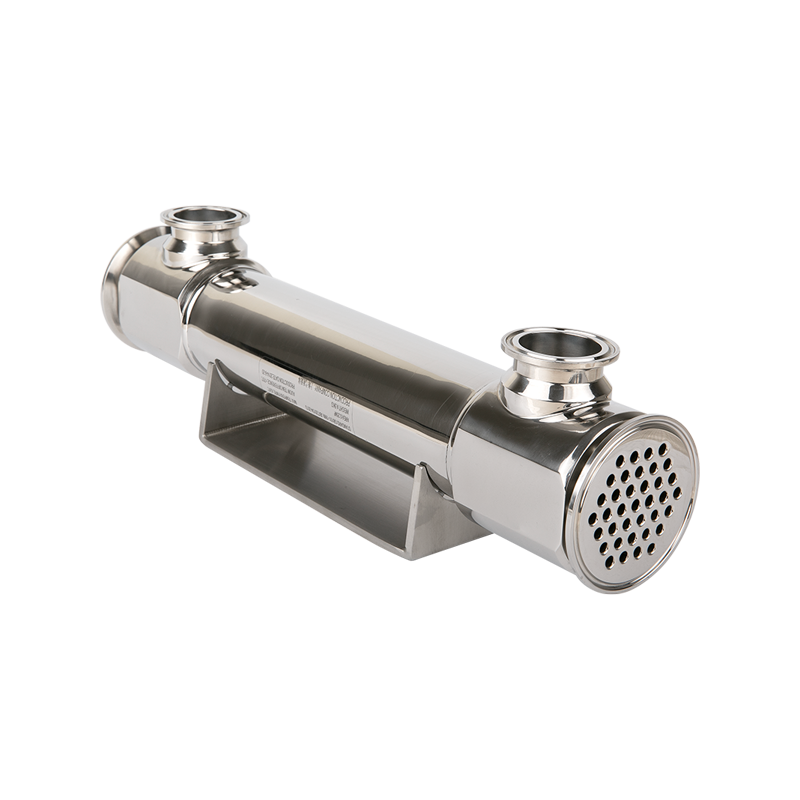
The supplier's manufacturing discipline matters as much as the drawing. ELING's sanitary shell-and-tube heat exchangers are produced in a facility equipped with CNC machining centres, welding stations, and in-house inspection capability, and they are delivered with the documentation needed for pharmaceutical qualification. That combination—correct design, controlled fabrication, and complete paperwork—is what turns an ordinary exchanger into a defensible part of an aseptic process.
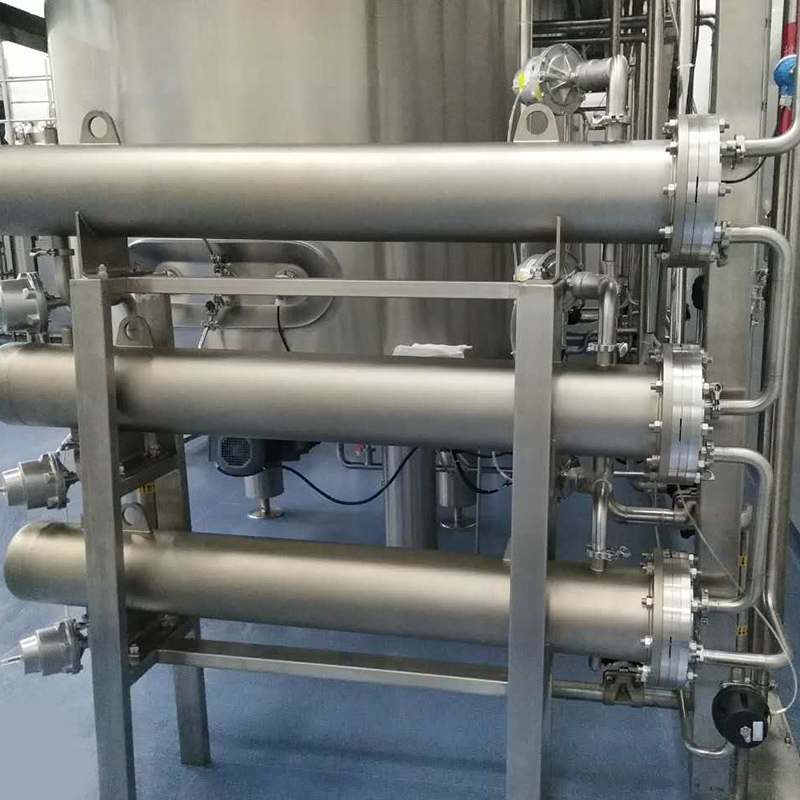 304, 316L stainless steel Sanitary Shell & Tube Heat Exchangers Suppliers, CompaShanghai Yiling Fluid Machinery Equipment Co., Ltd is China Custom 304, 316L stainless steel Sanitary Shell & Tube Heat Exchangers Suppli...View Product →
A double tubesheet heat exchanger is not an exotic compromise; it is a straightforward engineering decision for any pharmaceutical duty where fluid separation matters. Specify it for product-contact and high-purity utility services, verify the leak-detection space during installation, and audit the supplier's fabrication and test records as carefully as the thermal calculations. Get those elements right, and the exchanger becomes an invisible, reliable part of the process—exactly what it should be.