

Content
- 1 What an Aseptic Connector Really Does
- 2 The Main Types of Aseptic Connectors
- 3 Comparing the Four Families
- 4 Where These Connections Decide Product Quality
- 5 Why "Aseptic" Does Not Automatically Mean Sterile
- 6 A Practical Selection Checklist
- 7 Habits That Protect a Connection on the Floor
- 8 How We Approach Connector Design
Aseptic processing has a habit of failing at the joints. Tubing runs, filter housings, vessels and filling lines are usually well engineered; the moment two of them have to be joined — in a Grade A zone, inside an isolator, or on a transfer trolley at three in the morning — everything depends on how that single connection is made, shielded and verified.
We build transfer hardware for sterile pharmaceutical production, and much of our work happens at exactly that joint. What follows is a practical look at aseptic connectors: the main families, where each one earns its place, and the details that decide whether a connection is genuinely aseptic or only well intended.
What an Aseptic Connector Really Does
At its core, a connector is a boundary. It lets two process paths meet — a bag and a line, a container and an isolator port, a vessel and a sampling point — while keeping the product on the inside and the surrounding environment on the outside. The engineering difficulty is that the moment of joining is also the moment when both sides are briefly exposed.
That is why aseptic connectors are rarely just fittings. They are assemblies: a valve face, a protective housing, a sterilant path, a locking mechanism and a documented procedure for the operator. Some arrive pre-sterilized and are used once; others are reusable stainless components that are cleaned and sanitized in place. Both approaches are legitimate — they simply suit different scales, products and plant layouts.
The Main Types of Aseptic Connectors
Four families cover most of the connections you will find on a modern sterile line. They differ in how they protect the mating interface, how often they can be used, and how much of the sterility assurance they shift onto the procedure.
Single-Use Sterile Connectors
Single-use connectors arrive pre-sterilized, usually by gamma irradiation, and are mated once before being discarded. They join tubing, bags, filters, bottles and bioreactors, and they remove a whole category of work from the plant: there is no connector to clean, no cleaning validation to repeat, and changeover between batches becomes a matter of minutes. Many modern designs are genderless, with a peel-away membrane that keeps both faces covered until the two halves are locked together.
The trade-offs are real as well. The flow path is fixed by the tubing bore, the connector mates only once, and you inherit extractables and leachables documentation from the supplier. Most importantly, a single-use connector is sterile only until someone opens it in the wrong place — the sterility claim belongs to the packaging, not to the bench.
Split Butterfly Valves
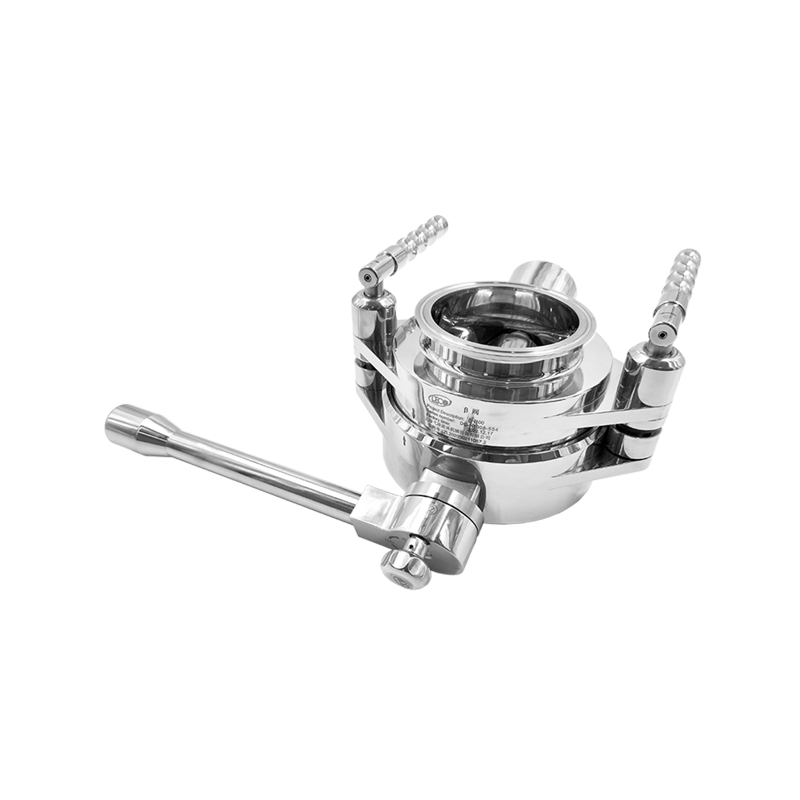
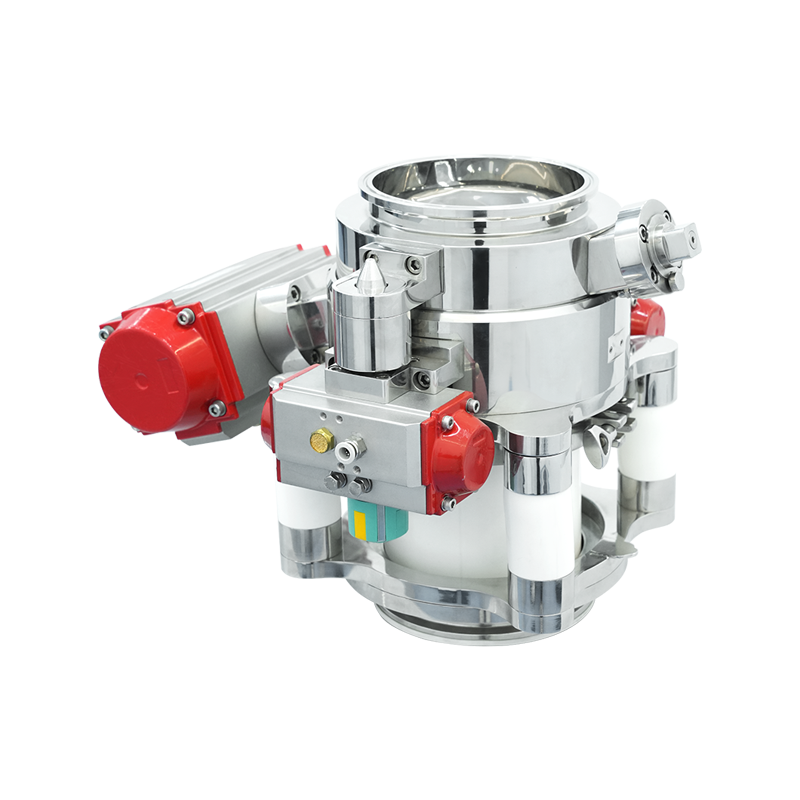
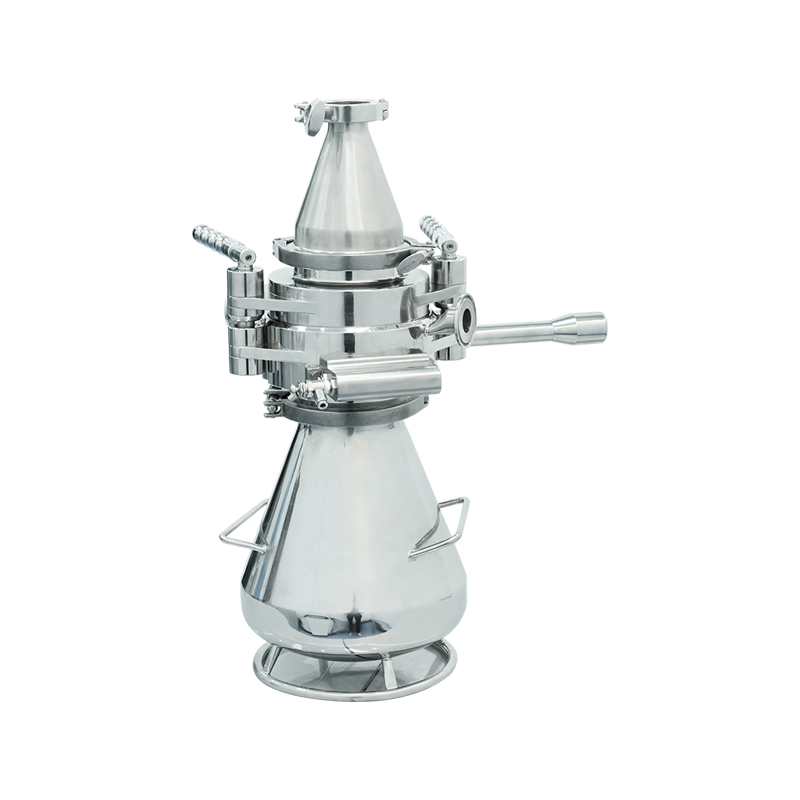
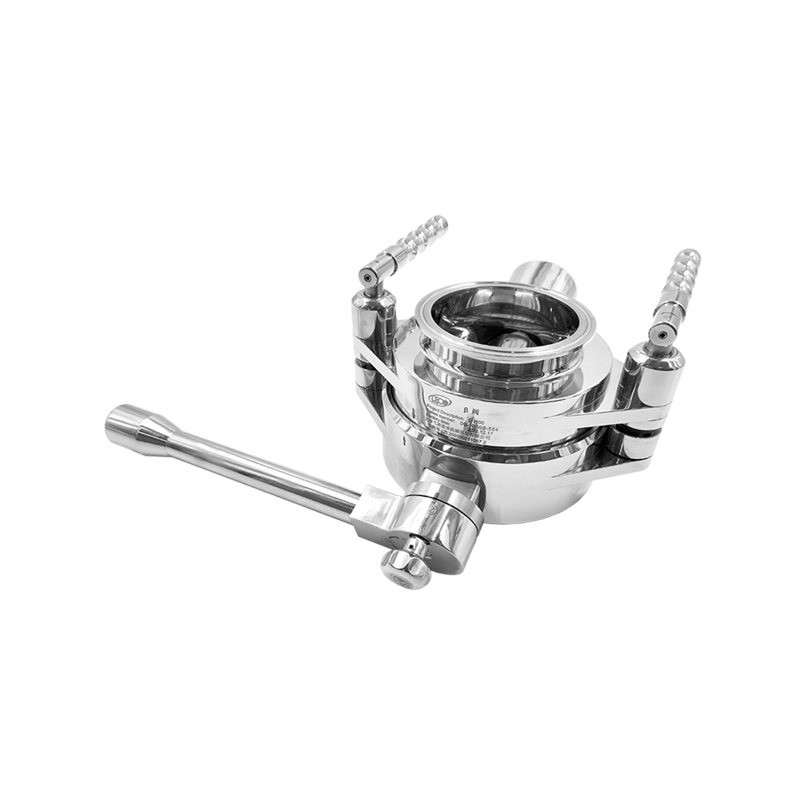
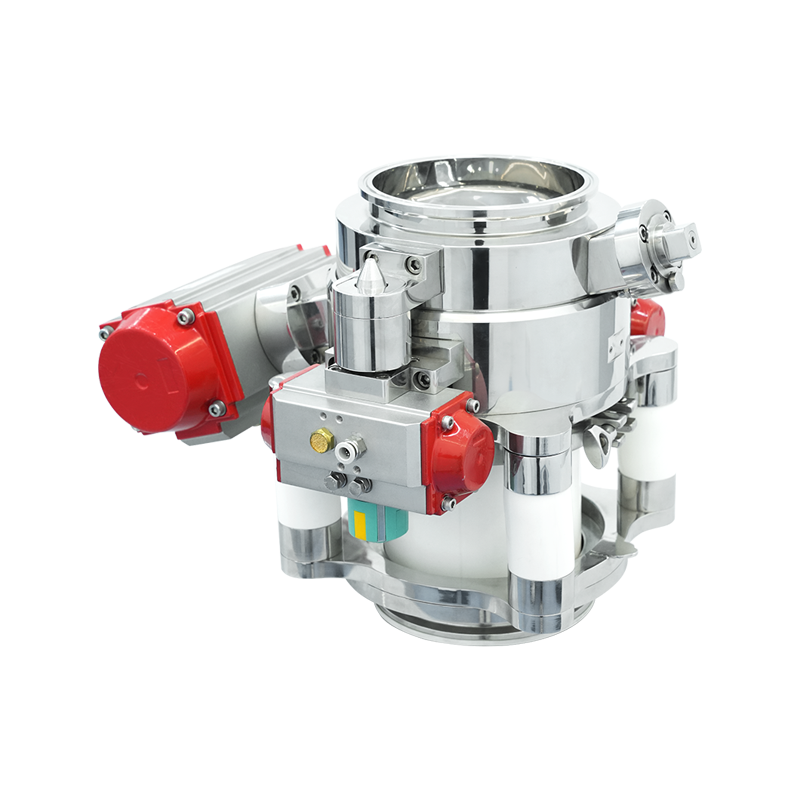
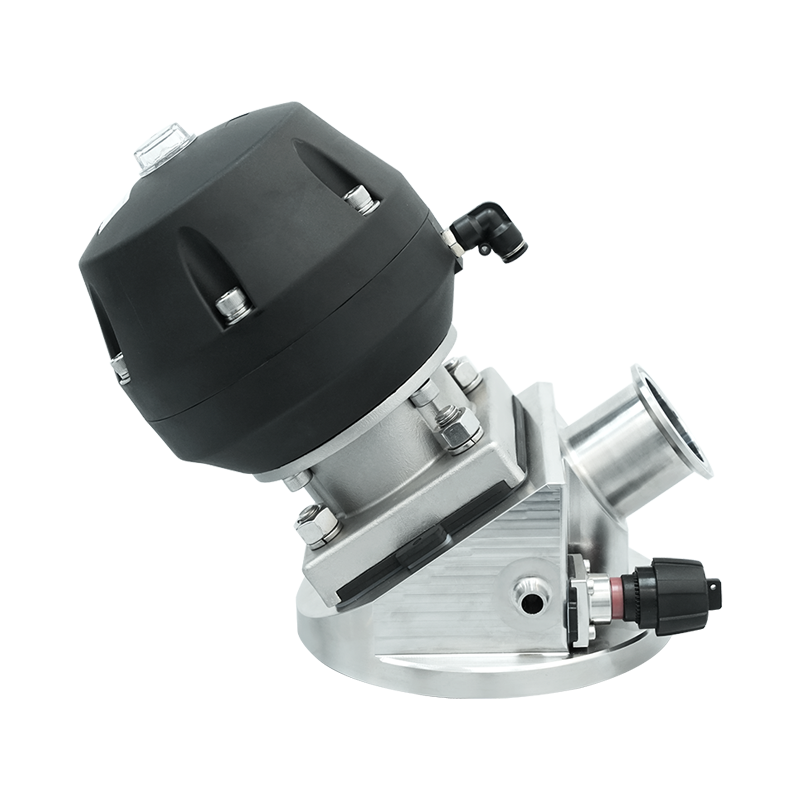
The split butterfly valve divides a butterfly valve into two halves. The active half sits on the process equipment; the passive half travels with the container. When the two are docked, the valve faces meet inside an enclosed interface, the exposed surfaces are treated with a sanitizing agent for the required contact time, and only then do the discs open to let powder or liquid pass.
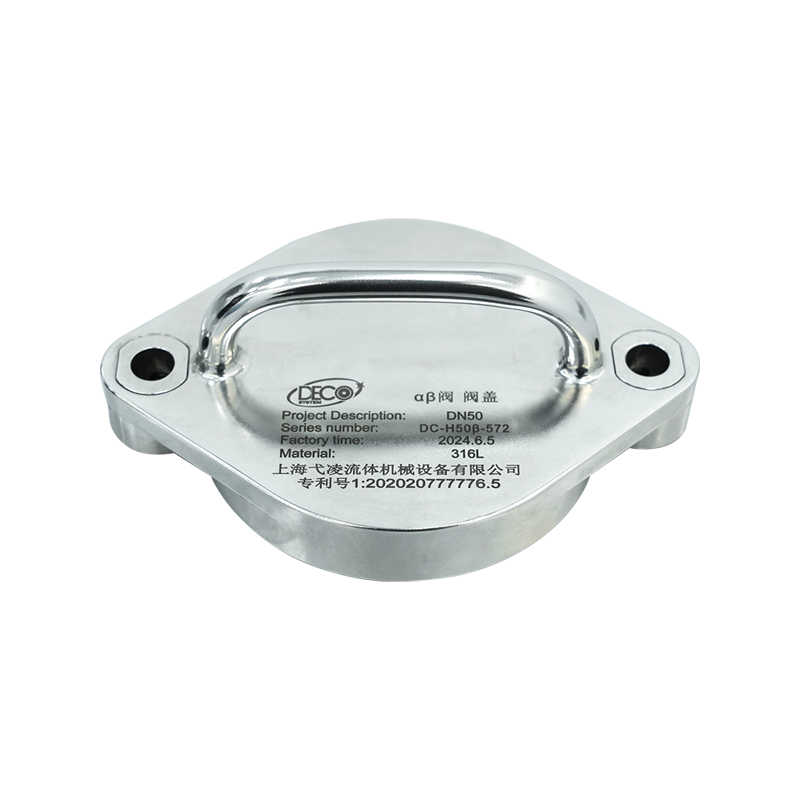
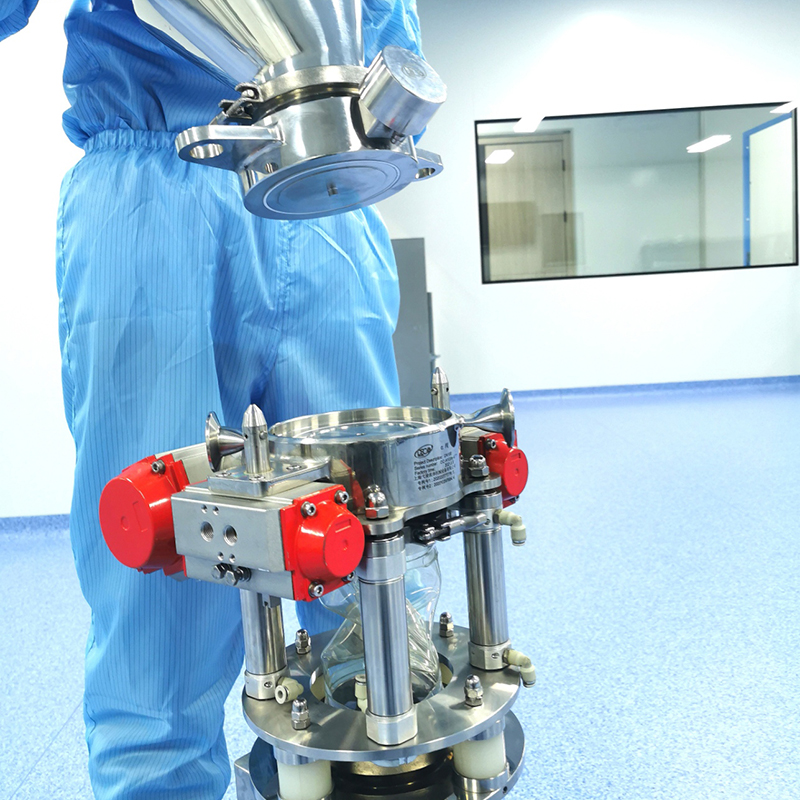 Aseptic Split Butterfly Valve (αβ Valve)Active and passive halves enable repeated, scalable contained transfer of sterile powders and liquids, with OEB5 sealing and GMP-oriented design.View Product →
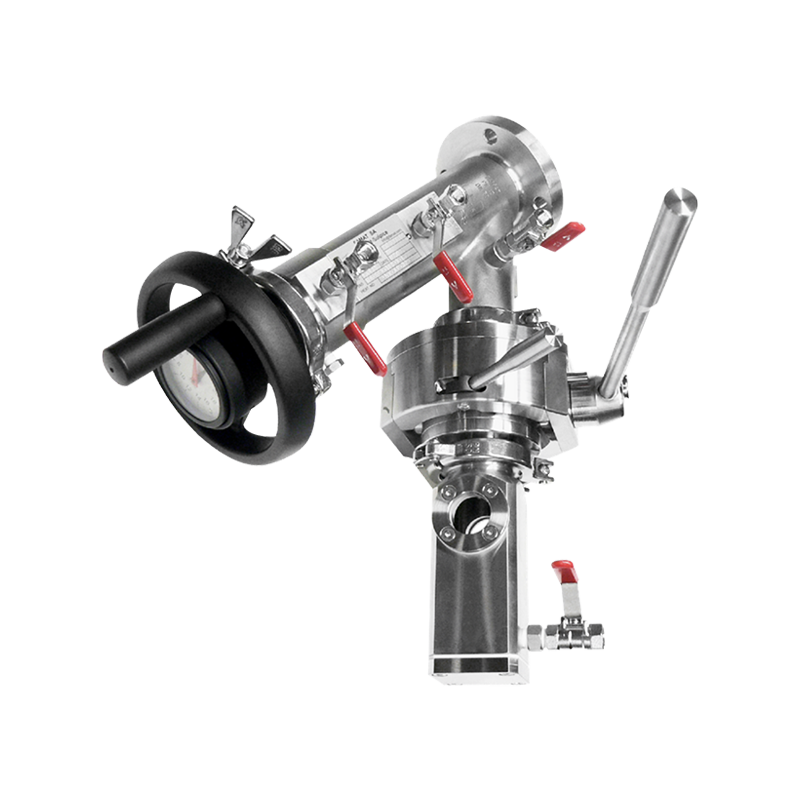
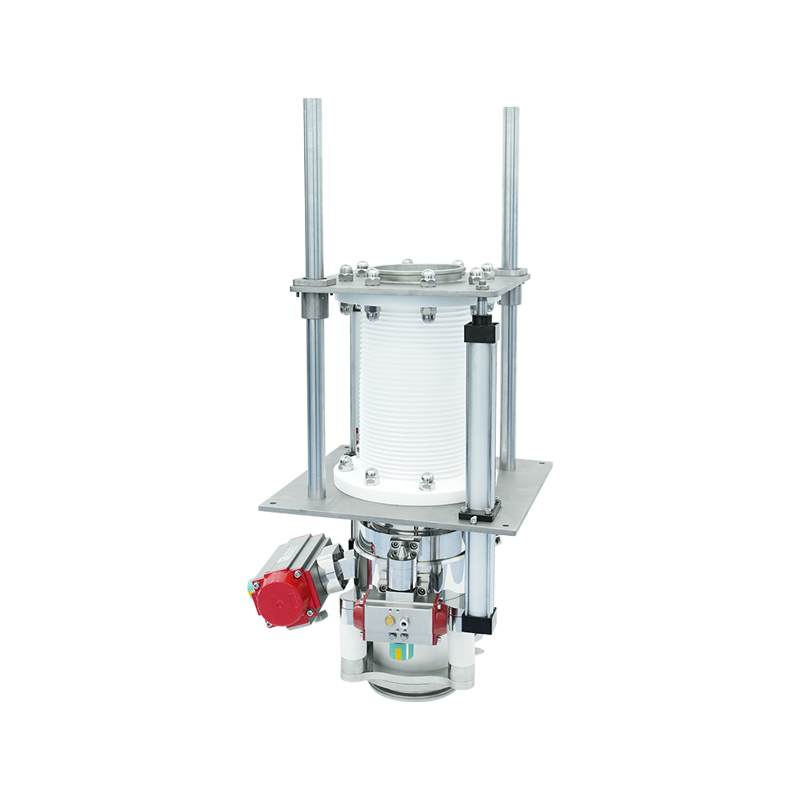
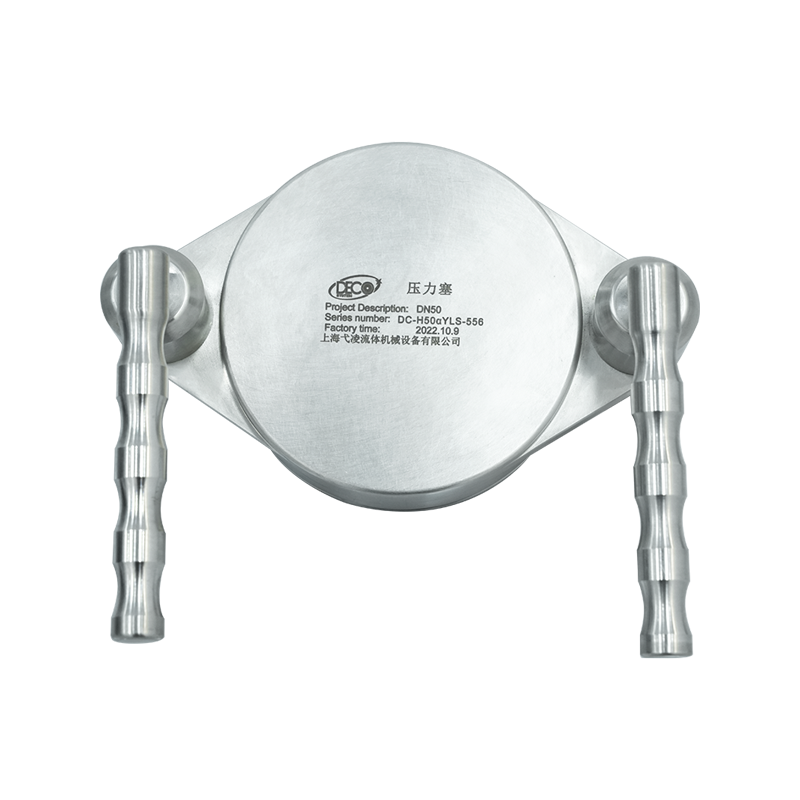
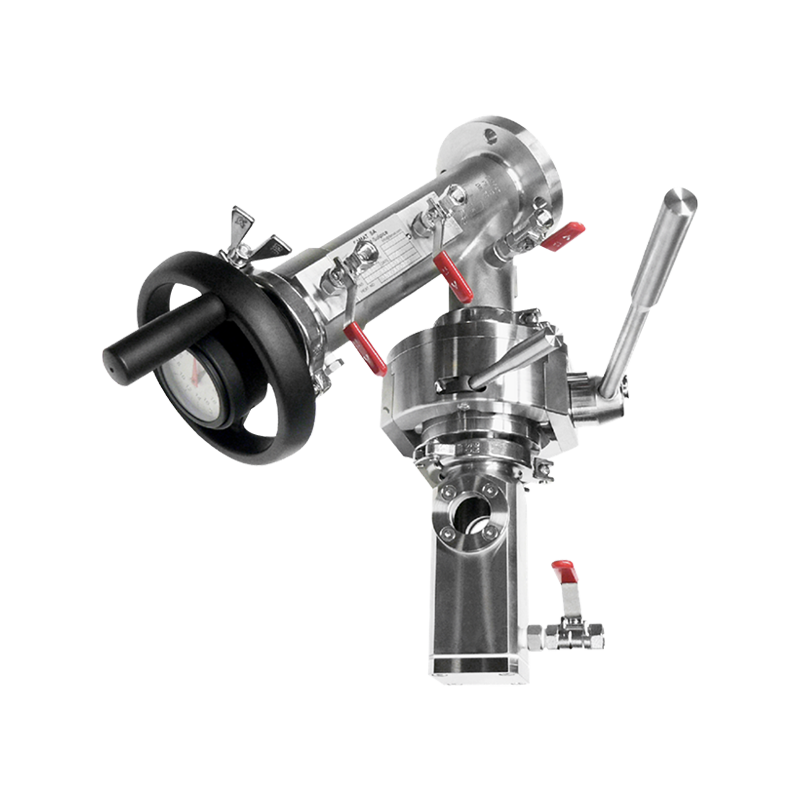
Because each half stays with its own side of the process, the valve can be used hundreds of times. It also scales well: the same principle covers a 50 mm port on a laboratory rig and a 300 mm charging port on a production isolator. The surrounding hardware matters as much as the valve itself — lifting chassis for heavy containers, Alpha plugs and Beta covers for the periods between connections, cleaning devices for the interface, and sealed sampling valves when a sample has to leave the barrier. We described the full docking sequence in a separate note on how the aseptic split butterfly valve maintains sterility during material transfer.
Rapid Transfer Ports
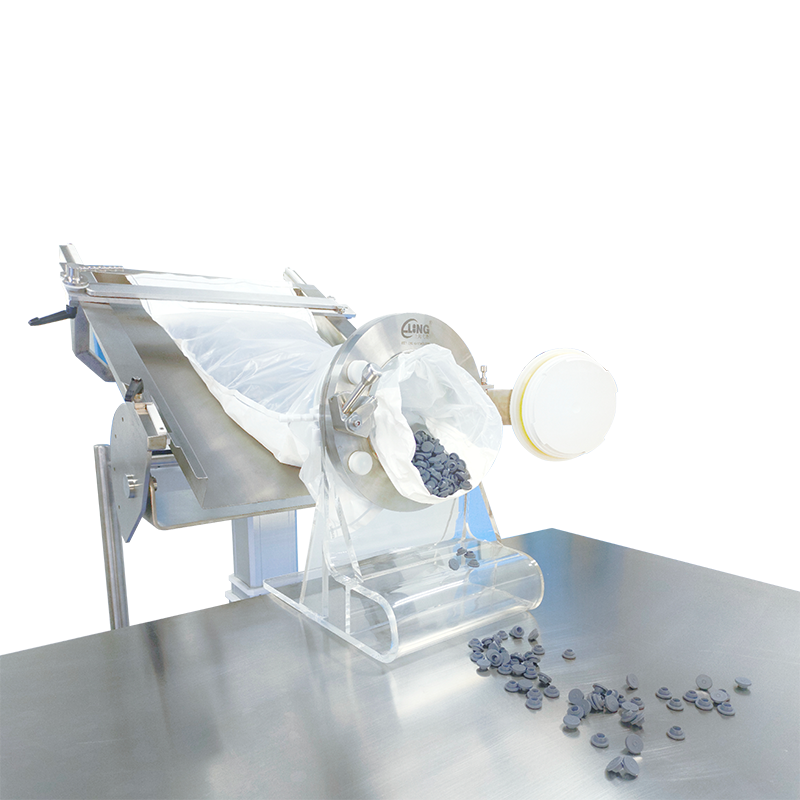
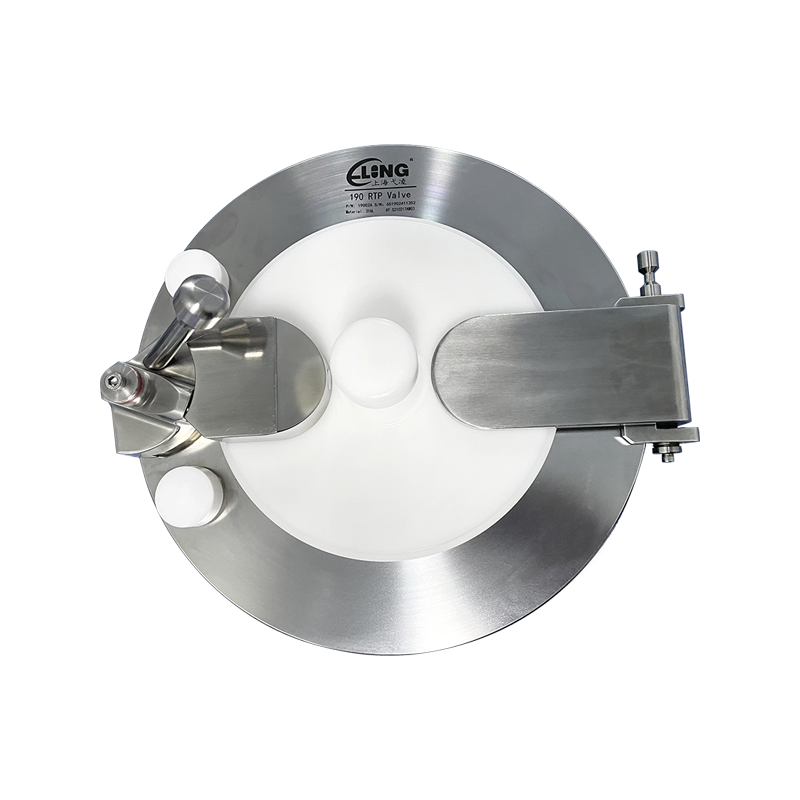
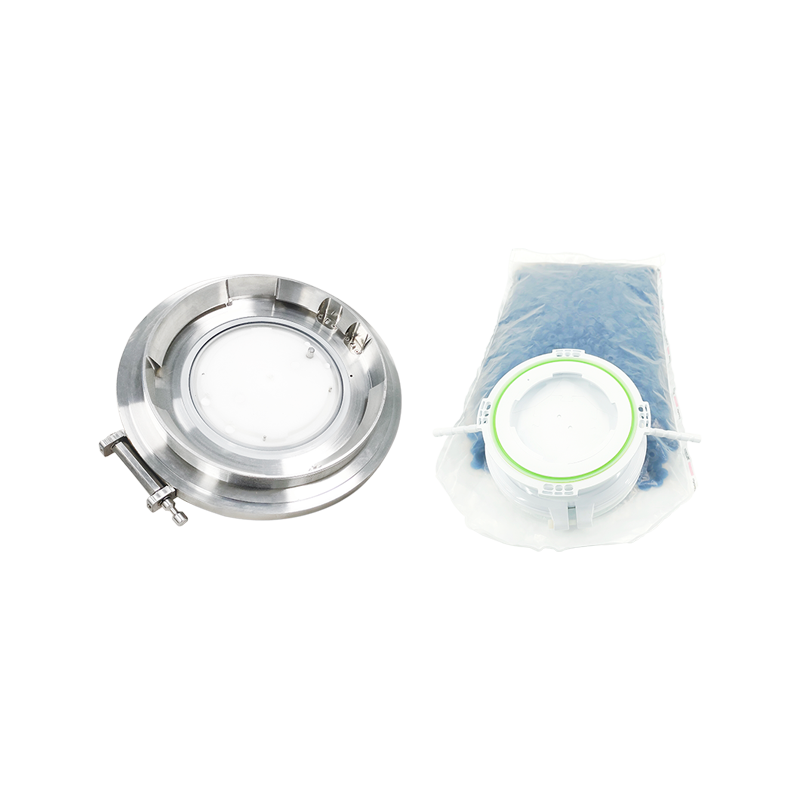
An RTP is built around a port in a barrier wall. The alpha side is mounted on the isolator, glovebox or equipment; the beta side arrives as a bag, container or sterilization can. The beta assembly docks, the interface is treated, the door opens, and the contents pass into the controlled space without the barrier ever being broken in the ordinary sense.
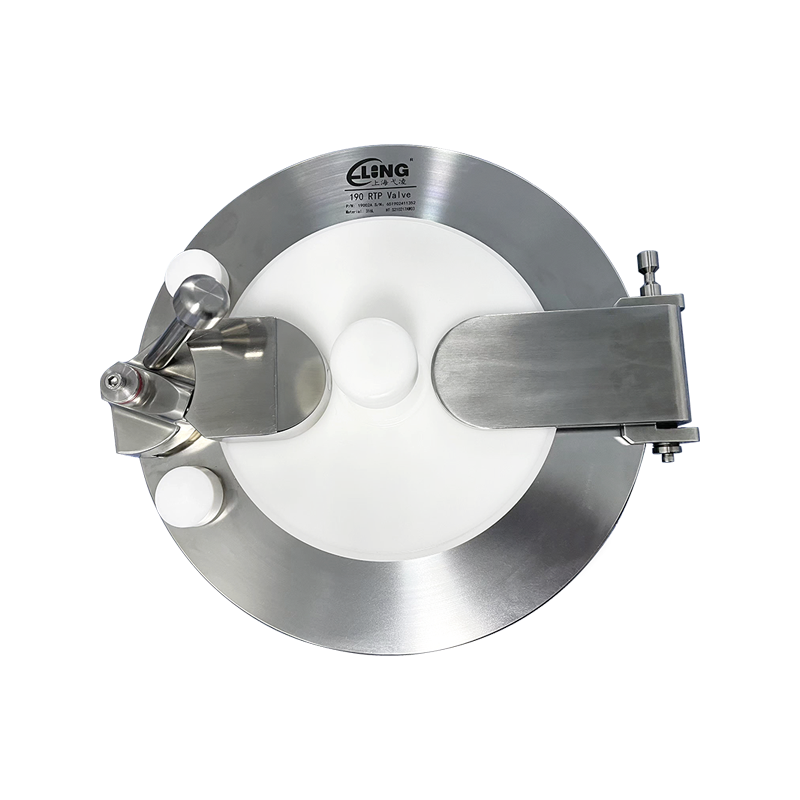
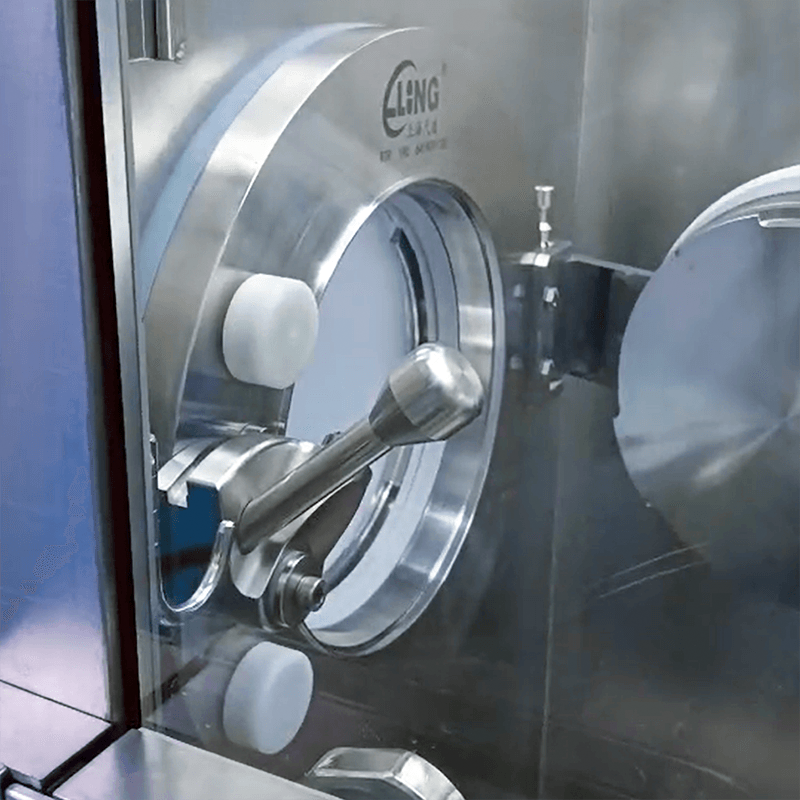 RTP Valve and Beta Bag SystemAlpha/Beta port system with interlocks supports contained transfer into isolators and pairs with Beta bags and containers for sterile handling.View Product →
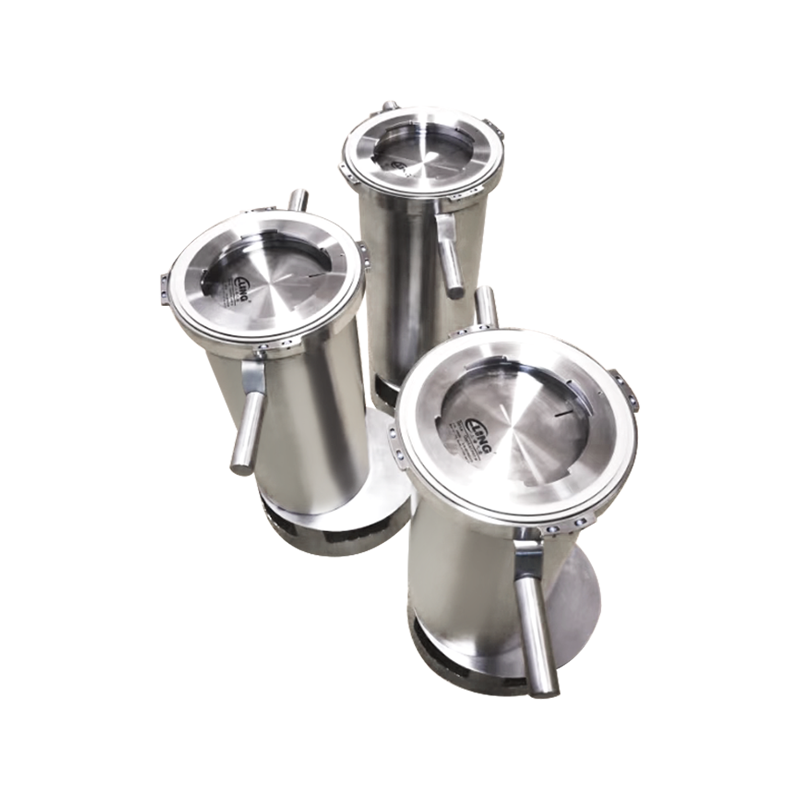
RTP work is a system exercise. The valve, the beta bag, the sterilization container and the trolley that carries a heavy vessel all have to line up, or the operator ends up improvising at the worst possible moment.
Aseptic Sampling Points
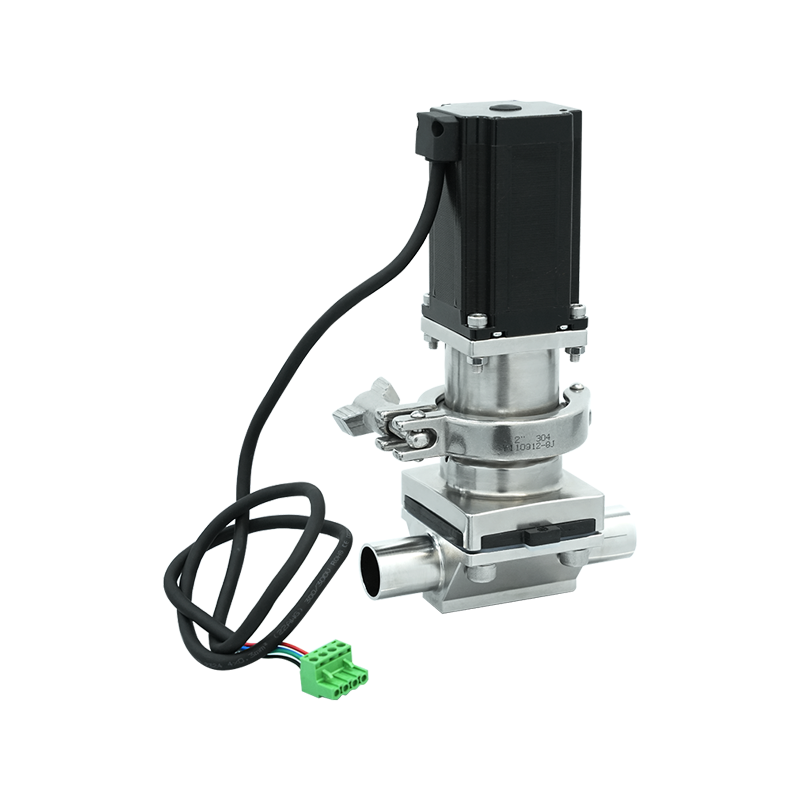
Sampling is a connector problem in disguise. A sampling valve has to give a representative sample without opening a path between the process and the room. Reusable designs with a sanitizable seat and a defined flush volume are the usual answer on bulk lines; single-use sampling bags or septum ports cover smaller volumes and single-use flow paths.
Comparing the Four Families
| Connector type | Reusable | Typical process state | Where it fits best | Points to watch |
|---|---|---|---|---|
| Single-use sterile connector | No | Liquid or powder, small to medium bore | Single-use bags, tubing, filters, buffer and media transfer | Extractables file, one mating only, tubing size limits |
| Split butterfly valve | Yes | Powder and liquid, medium to large bore | Charging isolators, vessel-to-container transfer, solid dosage | Docking alignment, interface cleaning, plug and cover discipline |
| RTP port | Port yes, bag no | Components, containers, small equipment | Isolator and glovebox entry, sterile sampling, culture handling | Sterilant contact time, beta assembly integrity, trolley handling |
| Aseptic sampling valve | Yes | Liquid, small volume | In-process sampling, bulk harvest checks | Flush volume, dead legs, sample representativeness |
Where These Connections Decide Product Quality
In our experience the same handful of process steps keep coming back as the critical ones:
- Charging powder into an isolator, where bridging, static and alignment all compete with the operator's attention.
- Transferring buffer, media or process liquid from a single-use bag into a vessel without a tube welder or an open step.
- Introducing components, filters or small equipment into a barrier system through an RTP.
- Taking samples during a campaign, when the temptation to break the barrier "just once" is highest.
- Emptying or harvesting a vessel at the end of a batch, often with the least experienced operator on shift.
Why "Aseptic" Does Not Automatically Mean Sterile
A connector does not sterilize anything by itself. It creates a controlled space in which a sanitizing agent can act on the surfaces that will become the fluid or powder path. Whether that space actually reaches the required condition depends on the sterilant, the concentration, the contact time, the coverage of the surfaces, and whether the operator followed the sequence.
This is where good hardware earns its keep. A well-designed interface encloses the mating faces before they are exposed, keeps the protective housing in place until the treatment step, and gives the operator a clear, repeatable action rather than an interpretation. A poorly designed one leaves gaps that a busy technician will eventually find.
The practical conclusion is to qualify the process, not just the part. Media fills, dye ingress testing, pressure hold tests and bioburden monitoring tell you what your connection procedure actually achieves on your line, with your operators, on a Tuesday night shift.
A Practical Selection Checklist
- Start with the material state: powder bridging behaviour and liquid viscosity both change the bore you need.
- Fix flow rate and bore before looking at anything else, then check that the connector family offers that size.
- Check pressure and temperature ratings against SIP and CIP cycles, not only against running conditions.
- Decide how each part will be sterilized: gamma, autoclave, steam in place or chemical sanitization.
- Match the containment level — a high-potency compound needs a connector that protects the operator as well as the product.
- Count the mates. A hundred dockings a week is a completely different specification from one.
- Ask for documentation up front: material certificates, USP Class VI and ISO 10993 data, bioburden and endotoxin results for single-use parts.
- Think about the operator — gloves, sightlines, one-handed docking and physical effort at the end of a shift.
Habits That Protect a Connection on the Floor
- Keep protective covers and plugs in place until the last possible second.
- Respect the contact time of the sanitizing agent; a quick spray is not a sanitization step.
- Watch docking alignment — a partially engaged valve face is a leak path waiting for pressure.
- Write the sequence down and train it as a procedure, not as a personal habit.
- Record every connection during a campaign; deviations tend to hide in steps nobody wrote down.
How We Approach Connector Design
ELING has been manufacturing pharmaceutical equipment since 2010, with a factory in the Jiaxing area and a product range built around the same handful of process actions: getting material in and out of a controlled space, keeping it sterile while it moves, and cleaning up afterwards. Our containment systems and aseptic transfer processes portfolio grew out of customer requests rather than a catalogue plan — a valve here, a bag there, then the trolley that makes the whole thing usable.
That is also why we tend to ask about the procedure before we quote the part. A split butterfly valve is only as good as the covers, the lifting chassis and the cleaning routine around it; an RTP only works if the beta bag and the container arrive at the port in the right condition. If you are transferring sterile powder, the same logic applies to the container itself.
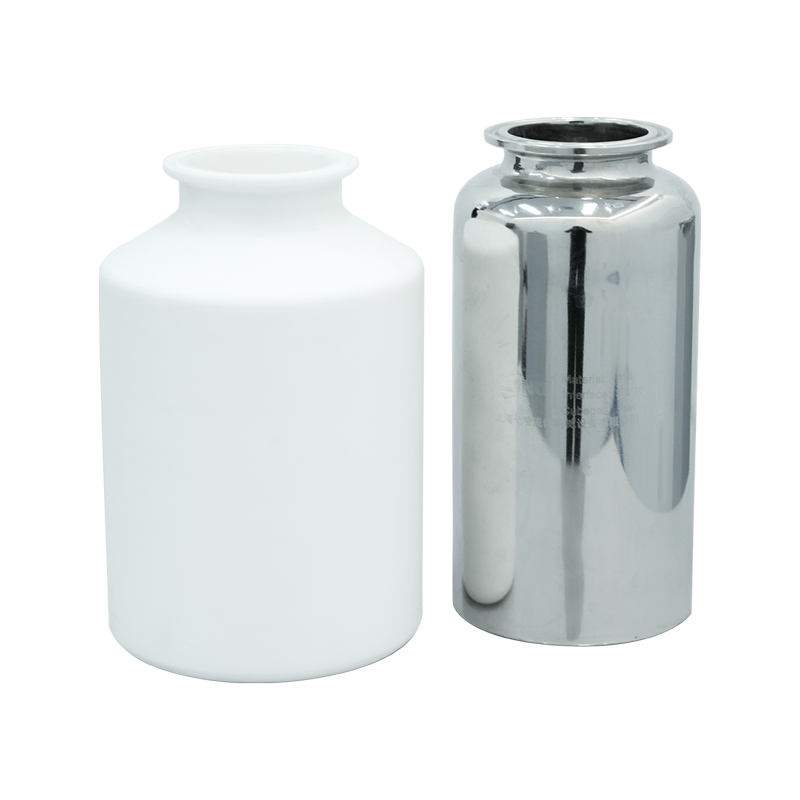
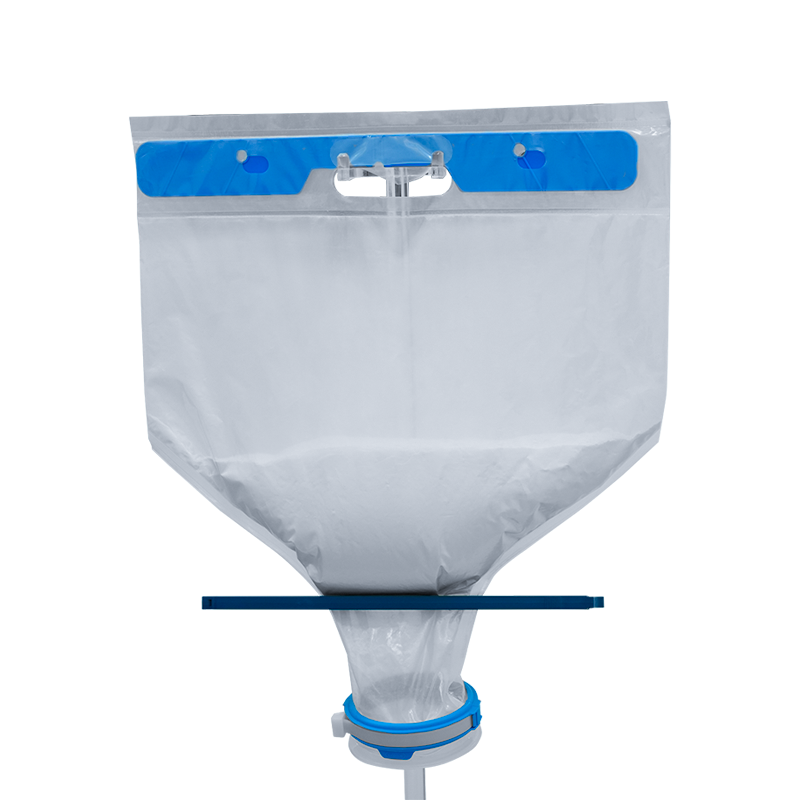
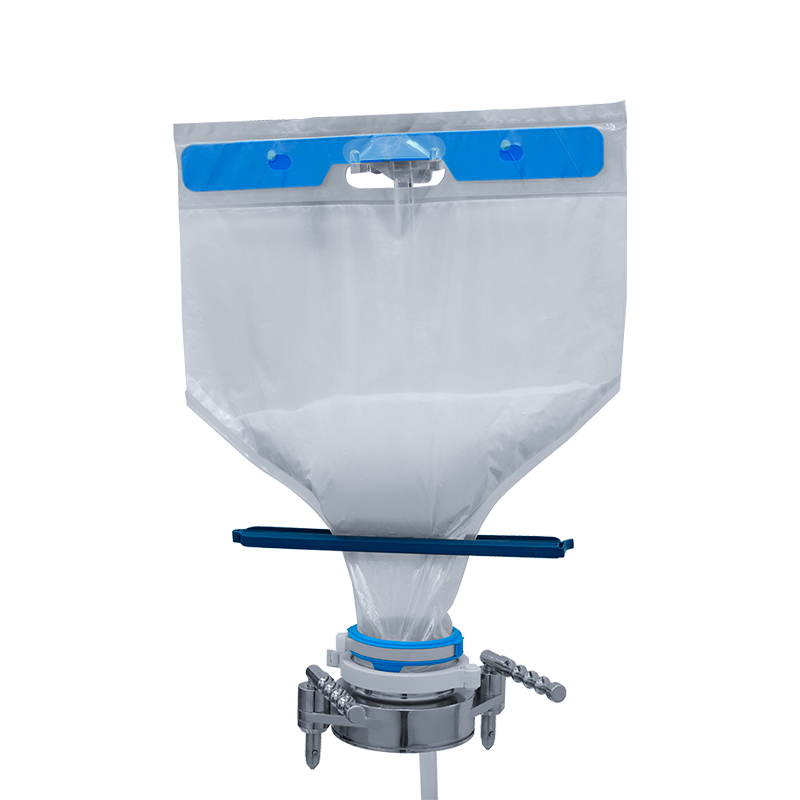
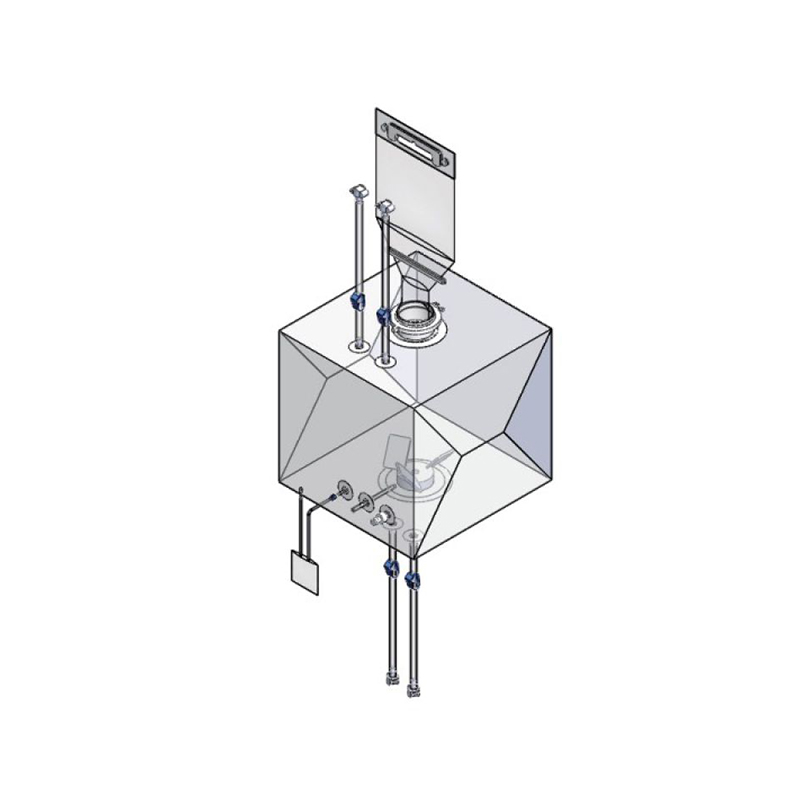 Disposable Sterile Powder Transfer BagSingle-use aseptic bag with 3D clamp fitting for powder transfer, storage and feeding; antistatic option and 3–100 L volumes.View Product →
Aseptic connectors are a small part of a sterile facility's capital spend and a very large part of its contamination risk. The good news is that the choice is rarely mysterious: match the connector to the material, the barrier and the number of mates, then invest at least as much effort in the written sequence as in the hardware. If you would like to talk through a specific transfer step, our engineers are usually happiest with a drawing and a description of what happens on shift.