

Content
- 1 What Are Bioprocessing Bags, Exactly?
- 2 Film Construction: Where Most Decisions Become Permanent
- 3 Bag Formats and Port Configuration
- 4 Where Bags Earn Their Place in the Process
- 5 Connecting Bags Without Breaking the Sterile Boundary
- 6 A Practical Selection Checklist
- 7 Qualification, Testing, and Documentation
- 8 Field Notes: Problems We See Most Often
Single-use bioprocessing bags have become one of the most familiar sights in a modern biopharmaceutical plant. They hang from stainless frames, sit inside tote bins, ride on rocking platforms, and connect into tubing trains that carry media, buffer, or harvested culture from one step to the next. For anyone who has spent long shifts on the floor, they are less of a novelty and more of a working assumption: the fluid sits in a bag, and the bag is replaced when the batch is finished.
That familiarity can make the specification stage feel routine. In practice, the opposite is true. A bag is a small system built from film, ports, tubing, and connectors, and every element has to match the fluid, the process step, and the hardware around it. What follows is a practical walkthrough for engineers and process specialists who want to choose well and avoid the issues that only show up at two in the morning in the middle of a campaign.
What Are Bioprocessing Bags, Exactly?
A bioprocessing bag is a flexible container made from multilayer coextruded film and assembled with ports and tubing into a sealed, ready-to-use unit. It reaches the plant already sterilized, most often by gamma irradiation, and is discarded after use. Working volumes range from a few hundred millilitres in a sampling bag to several thousand litres in a three-dimensional bag held inside a stainless tote.
Compared with fixed stainless vessels, the appeal is fairly direct. There is no cleaning validation for the bag itself, no clean-in-place or steam-in-place cycle, and no carry-over risk between products. Turnaround shrinks to a bag swap, and spending shifts from pressure vessels toward film, logistics, and support hardware.
The trade-offs deserve equal attention. Bags tolerate very little pressure, offer limited mixing intensity, carry a defined shelf life, and present a film chemistry that can interact with the product through extractables and leachables. They also depend entirely on the hardware around them, so bag and holder should be developed as one design, not two.
Film Construction: Where Most Decisions Become Permanent
Film is where the irreversible choices happen, because once the bag is welded shut you cannot change its contact layer. Most modern bags use a coextruded structure: an inner fluid-contact layer of polyethylene or a polyethylene copolymer for low extractables and reliable heat sealing, a core that may add gas barrier or stiffness, and an outer layer for mechanical toughness and printability.
| Construction | Typical contact layer | Practical strength | Where it fits |
|---|---|---|---|
| Multilayer polyethylene | ULDPE or LLDPE | Low extractables, good seal strength | Media, buffer, cell culture, general storage |
| EVA-based film | Ethylene vinyl acetate | Soft and flexible at low temperature | Freeze-thaw, small-volume sampling |
| PVC film | Plasticized PVC | Clear, weldable, low cost | Legacy or non-critical clarity applications |
| Barrier film with EVOH core | Polyethylene inner layer | Limits gas transmission | Oxygen-sensitive intermediates, longer holds |
The practical rule we share with customers is simple: pick the contact layer for compatibility, then decide whether you genuinely need barrier. Adding an EVOH core for a buffer that is used within a shift usually buys cost rather than protection.
Bag Formats and Port Configuration
Two-dimensional and three-dimensional bags
Flat two-dimensional bags are economical and work well for storage and short transfers, but they need a tray or bin because they cannot stand up on their own. Three-dimensional bags are welded with a shaped bottom, and often with internal baffles, so a filled bag holds a predictable geometry inside a tote. That geometry matters for mixing quality, for draining the last litre, and for using the full volume of the bin rather than a fraction of it.
Mixing bags
Mixing bags form a third family. Some carry a magnetically driven impeller welded into the film; others are designed to sit on a rocking platform where wave motion supplies the mixing energy. The choice reshapes the shear profile, the minimum working volume, and the amount of equipment surrounding the bag.
Ports and fittings
Ports decide how the bag behaves in the process. A typical assembly mixes sanitary flanges, hose barbs, aseptic connectors, a dip tube for liquid draw-off, a vent filter, a sampling port, and a drain. Every port is a potential leak path and a place where hold-up volume accumulates, so specify fewer, better-placed ports instead of a crowded panel that no operator can reach comfortably.
Where Bags Earn Their Place in the Process
Bags appear across the whole flow rather than in one niche, which is why a single specification template rarely fits all of them:
- Media and buffer preparation, including hold steps before filtration
- Inoculum and seed train expansion
- Single-use bioreactor culture, whether rocking or stirred
- Harvest and clarification hold
- Chromatography pool collection and ultrafiltration retentate
- Bulk drug substance storage, freeze-thaw, and cold-chain shipping
- In-process sampling and short holds between unit operations
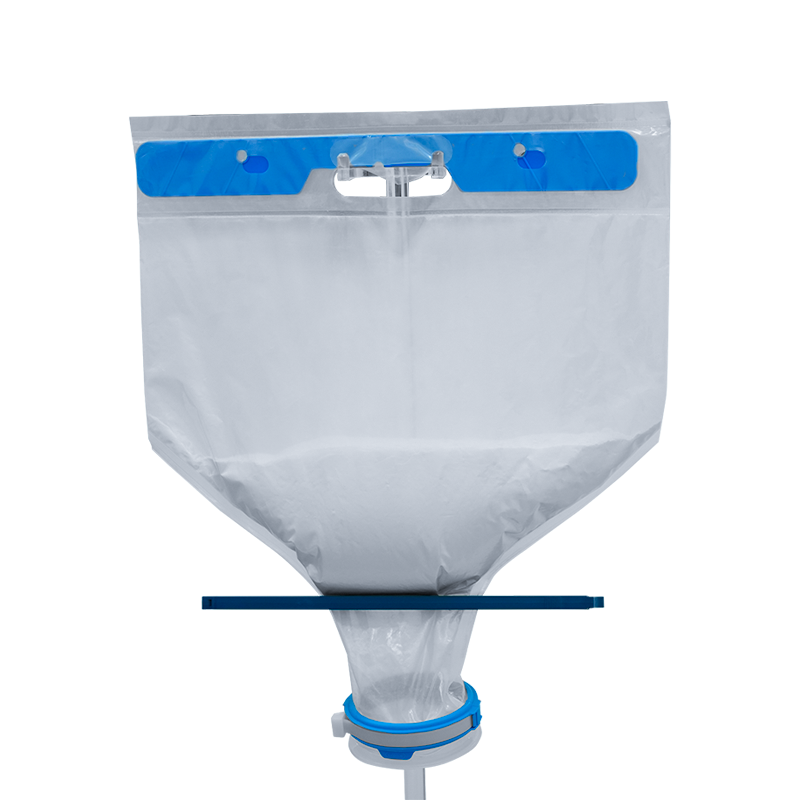
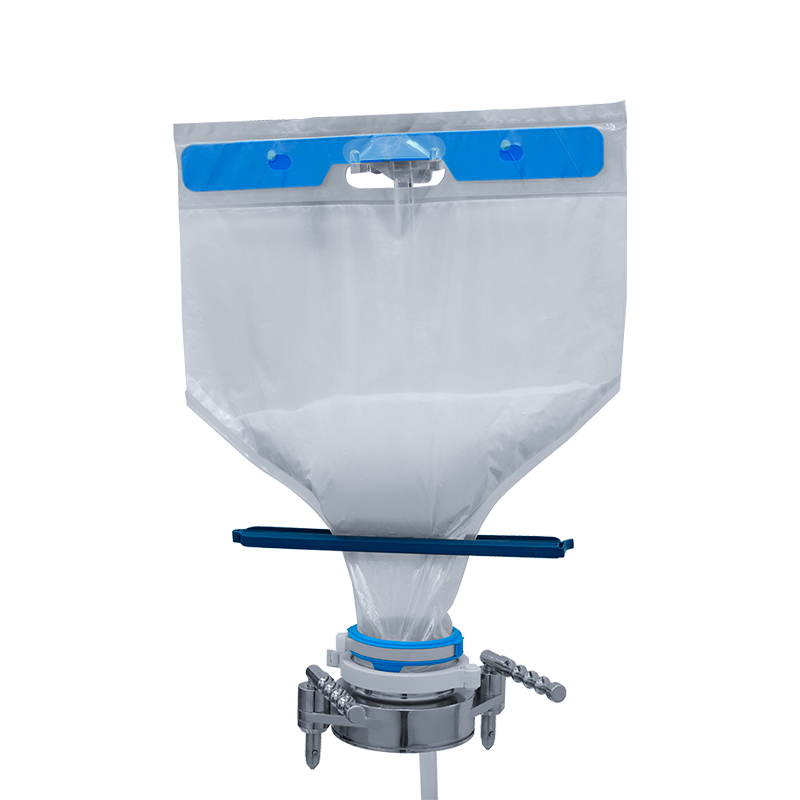
- Powder handling, where a dry bag with a secure connection keeps material both dry and sterile
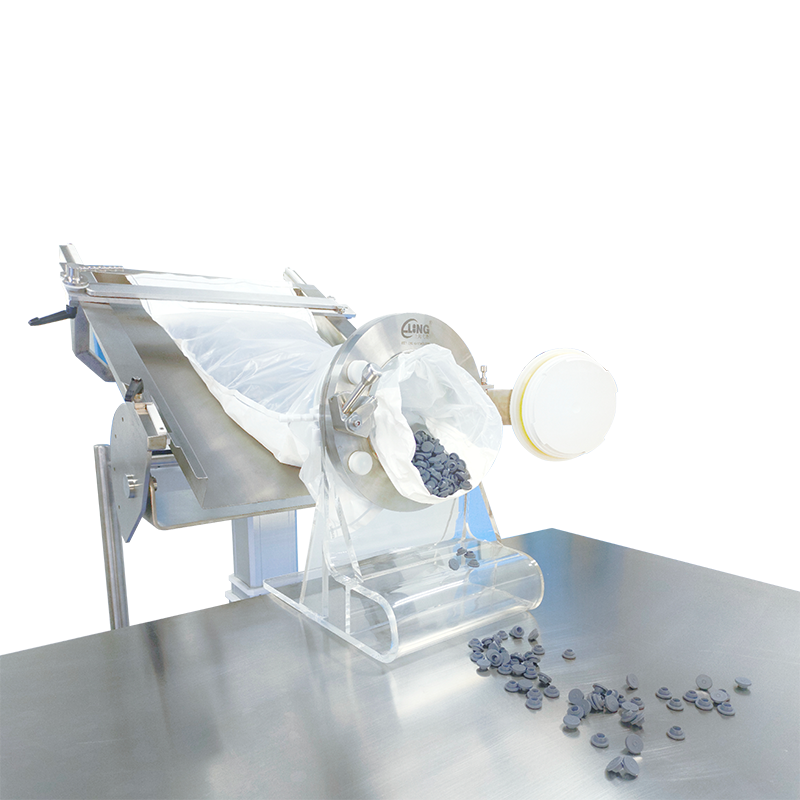
The last item is easy to underestimate. Powders behave nothing like liquids: they cannot be pumped, they settle into corners, and they generate dust the moment a connection opens. A dedicated single-use powder bag, closed with a mechanical interface rather than a tube weld, keeps the material contained from filling through discharge.
Connecting Bags Without Breaking the Sterile Boundary
Every time a bag is joined to a line, a sterility boundary is created for a few seconds and then has to hold for the rest of the batch. The industry has settled on three broad approaches, and most modern facilities use all of them somewhere.
Thermoplastic tubing welders fuse two tubes into one continuous, sterile flow path and are the default for liquid connections. Aseptic connectors use pre-sterilized mating faces protected inside a cap, so the operator connects the hardware without ever exposing the fluid path. Both approaches are well understood, and both depend on training: a weld that is not fully inserted, or a connector that is not clicked home, looks fine until the line is pressurized.
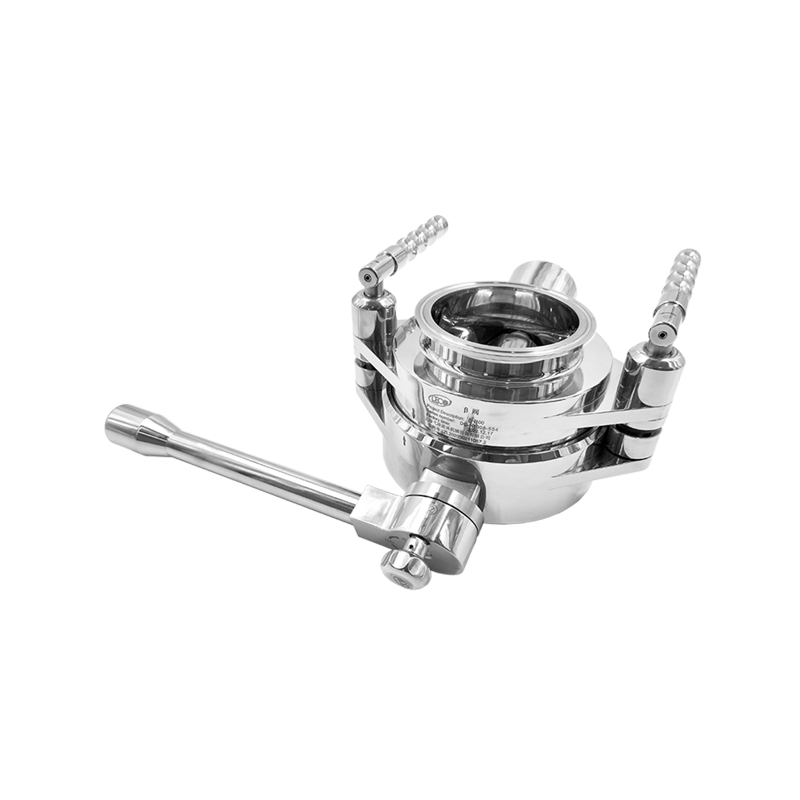
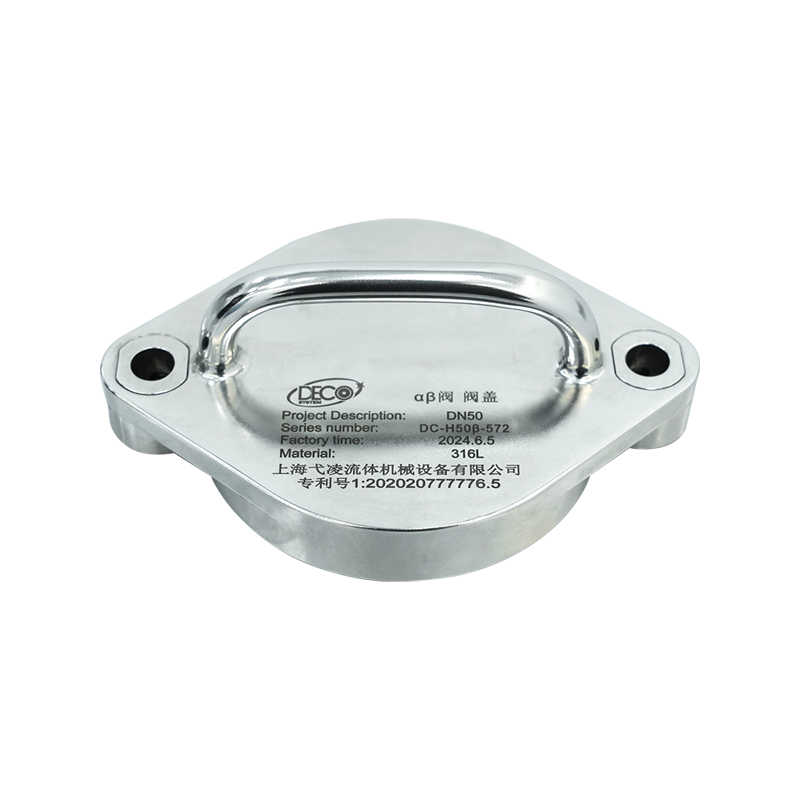
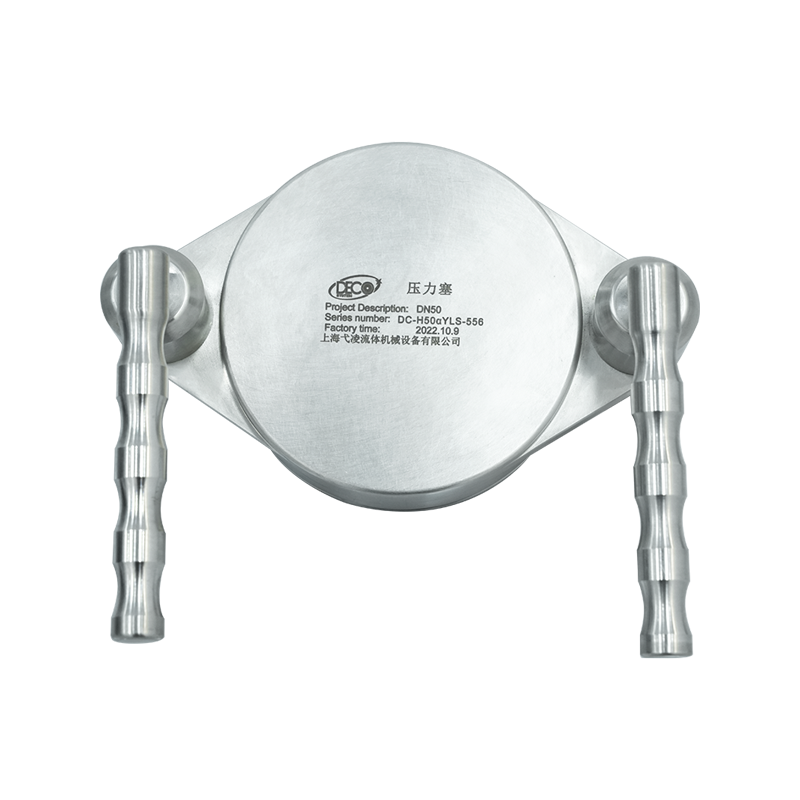
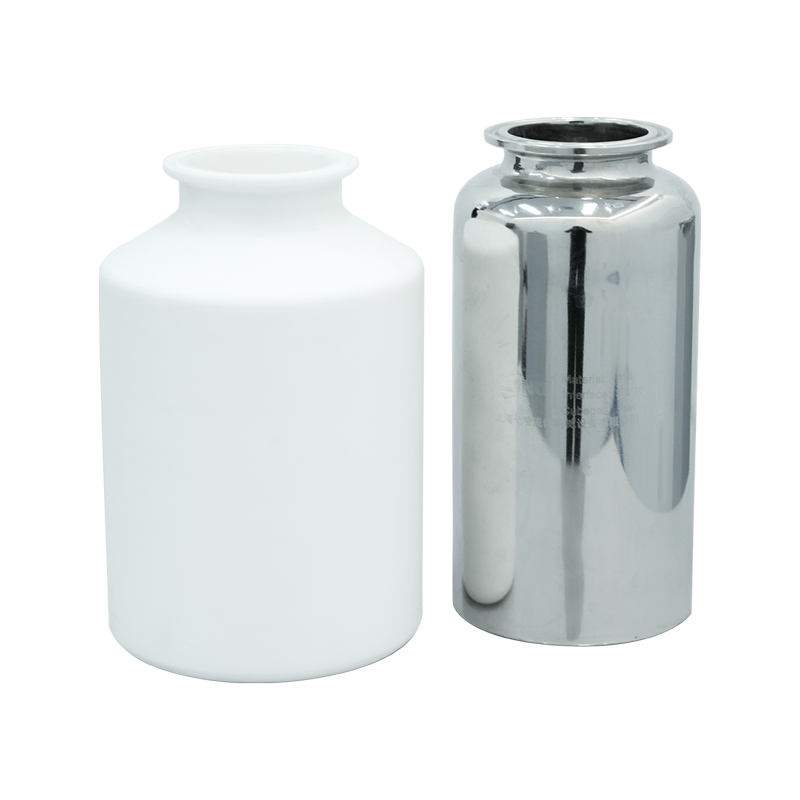
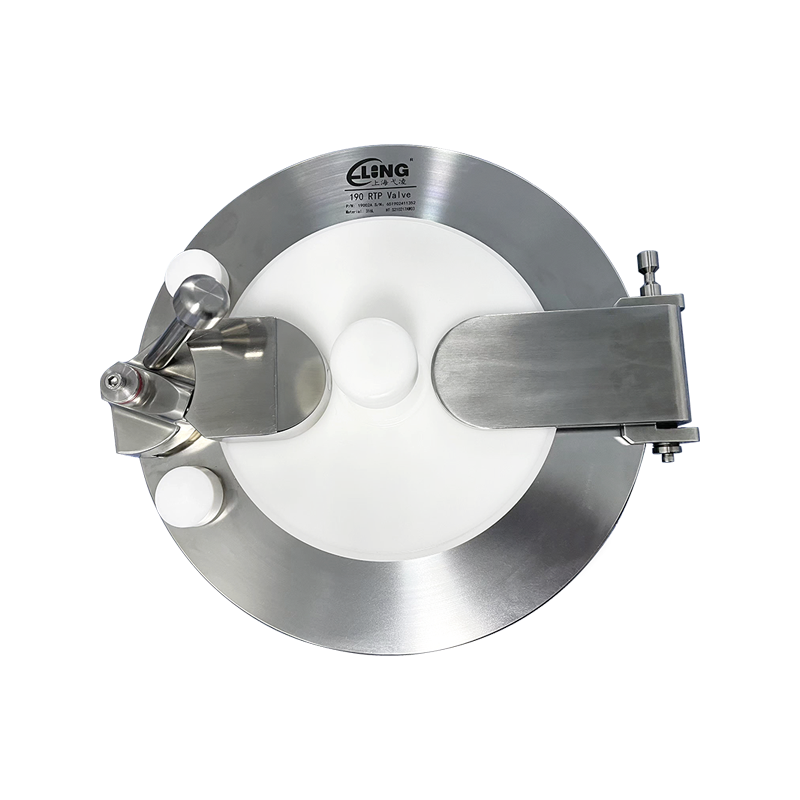
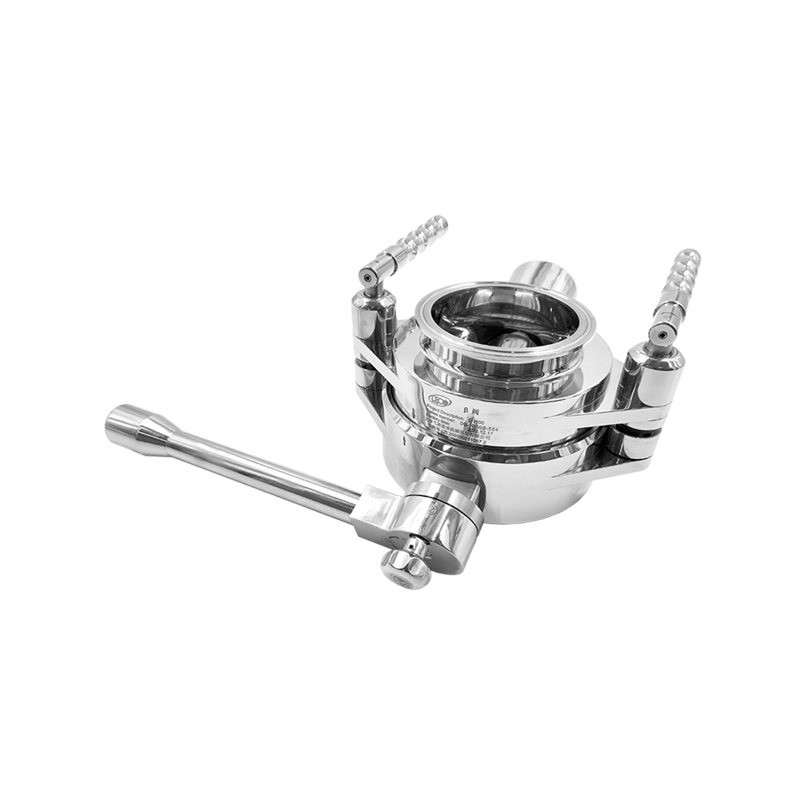
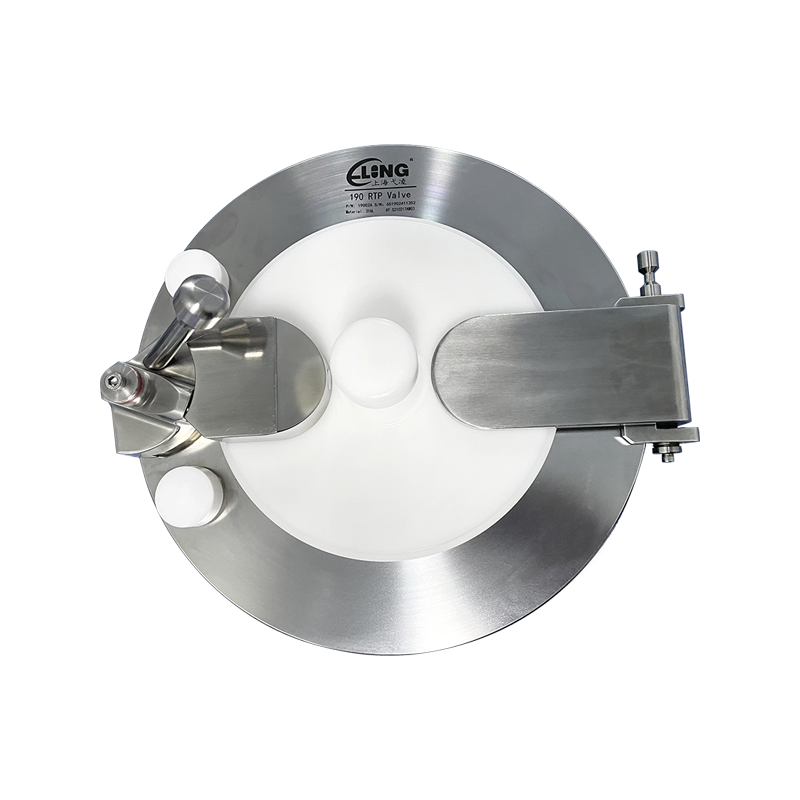
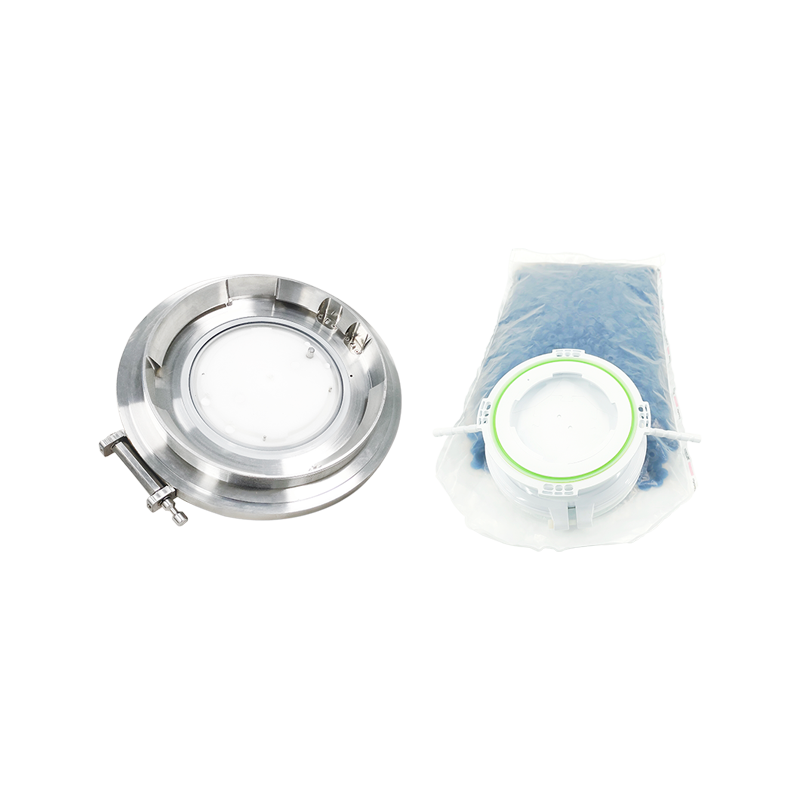
Powders need a different answer, because there is no tube to weld. The usual solution is a mechanical transfer interface mounted on the wall of an isolator, a glovebox, or a process vessel. A rapid transfer port valve allows a pre-sterilized container to dock, open, and transfer material while the barrier stays intact, and it pairs naturally with disposable liners and beta containers for the receiving side.
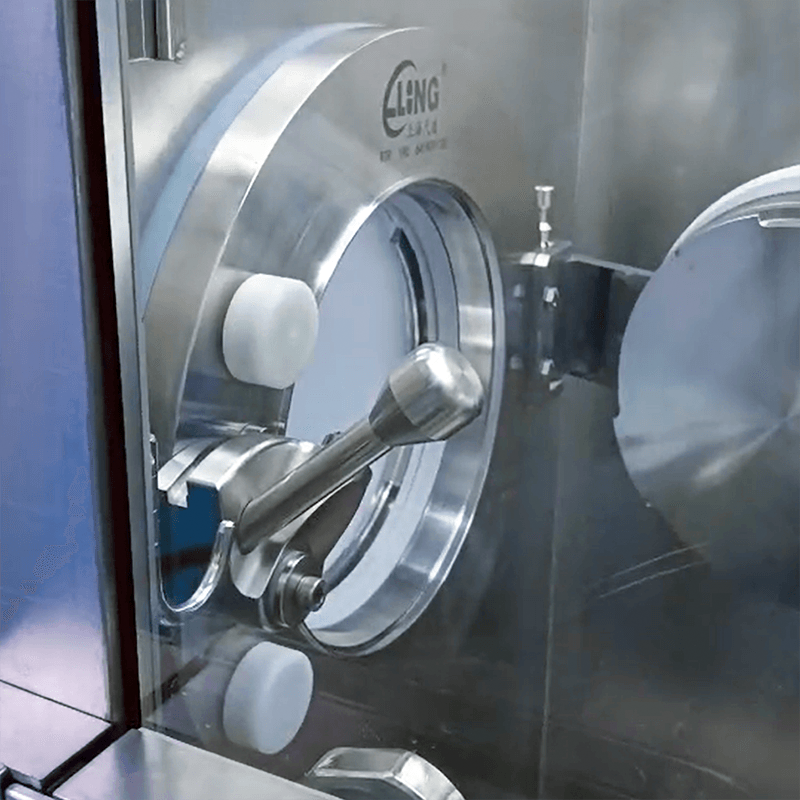 RTP Valve for Aseptic Transfer PortsDocks pre-sterilized containers to isolators or vessels while maintaining the barrier, with alpha/beta sealing and safety interlocks for aseptic transfer.View Product →
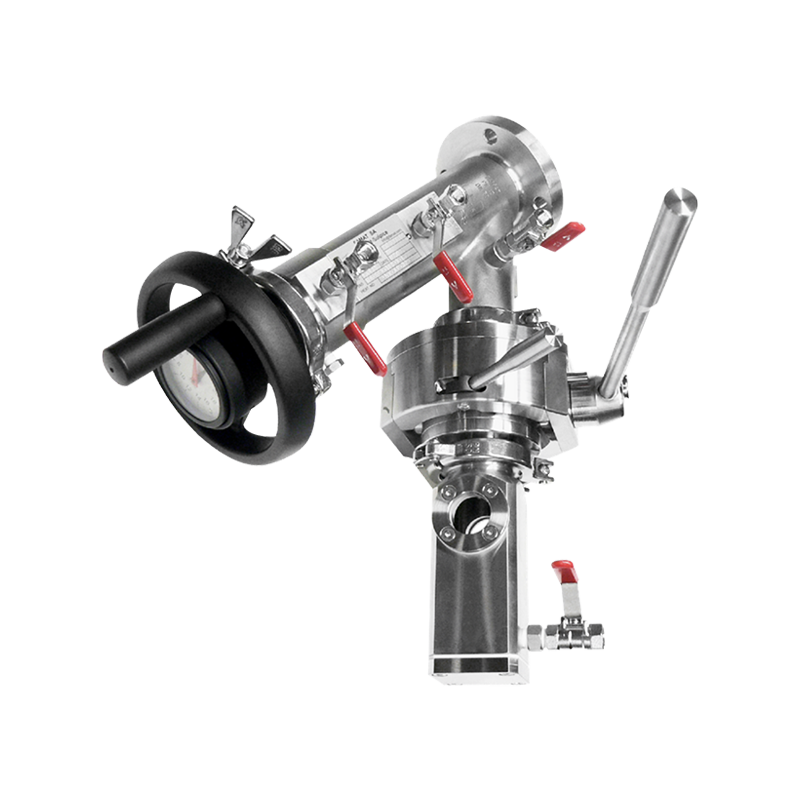
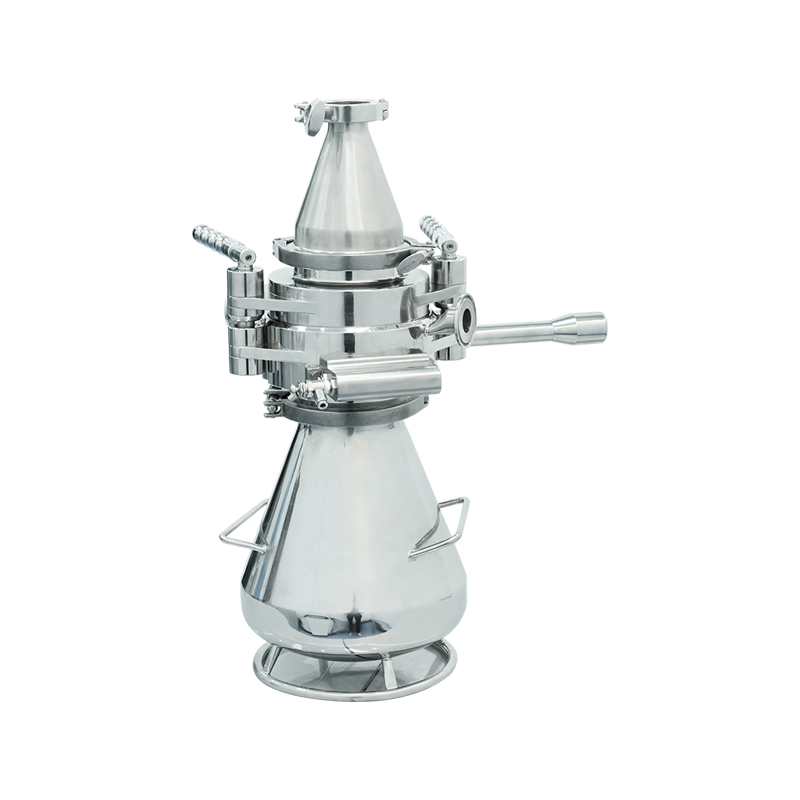
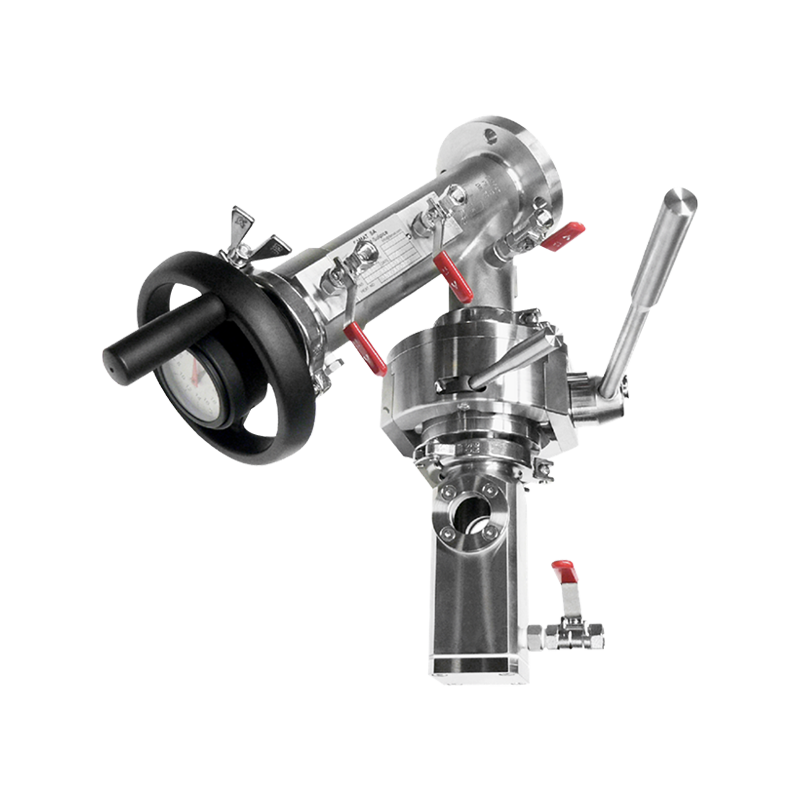
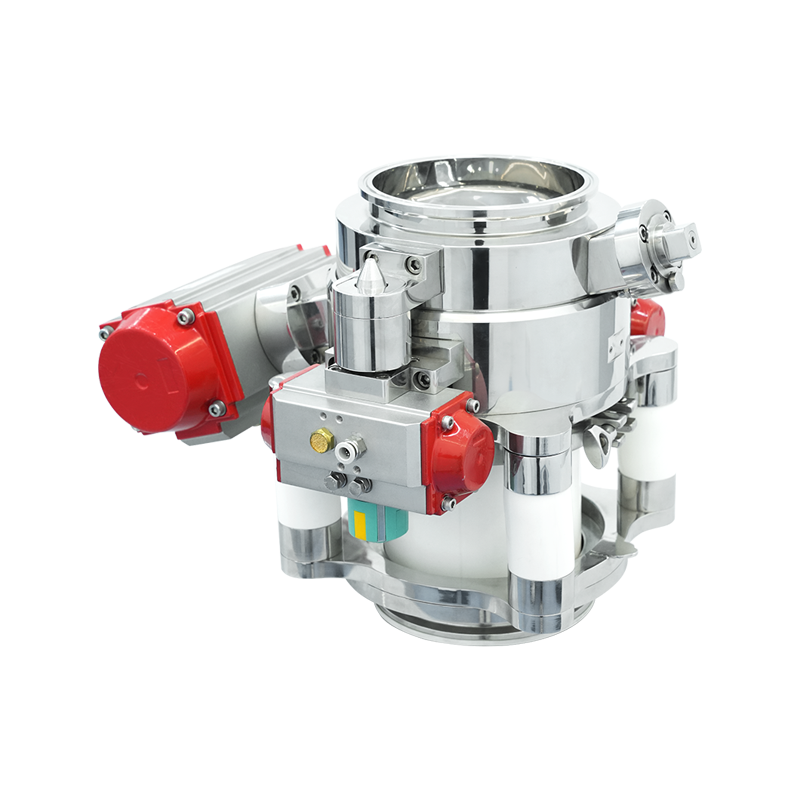
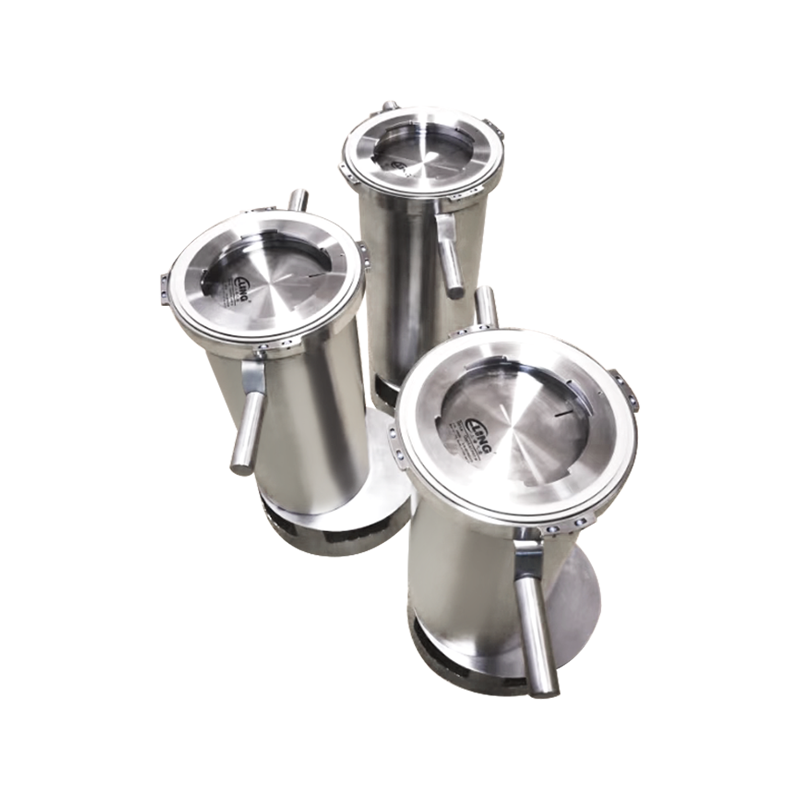
For higher-volume powder transfer between fixed vessels, a split butterfly valve does the same job in a different geometry. The active half stays on the process equipment, the passive half travels with the container, and the two halves open only when they are docked and locked. The result is a transfer step with no open powder and no manual scooping, which is exactly what containment strategies depend on.
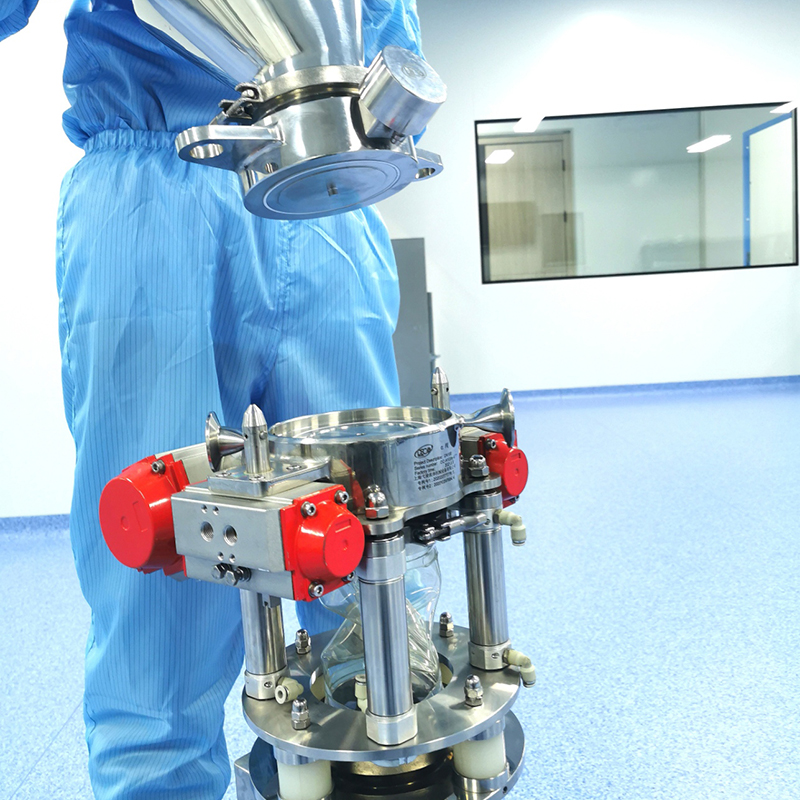 Aseptic Split Butterfly Valve for Powder ContainmentProvides closed transfer of high-activity powders between containers, with OEB5 sealing and low-torque docking to protect operators and sterile material.View Product →
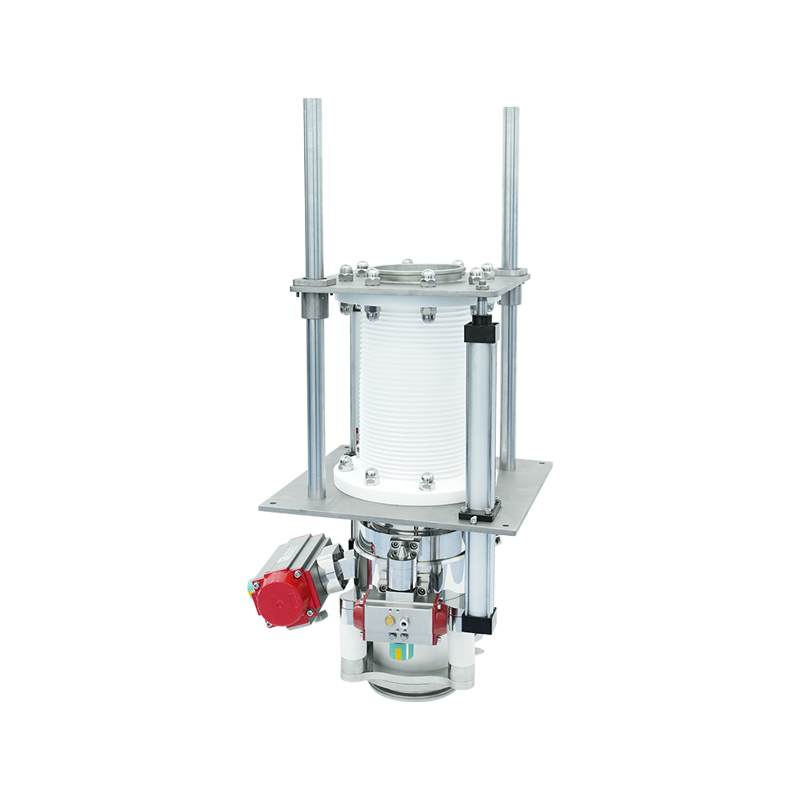
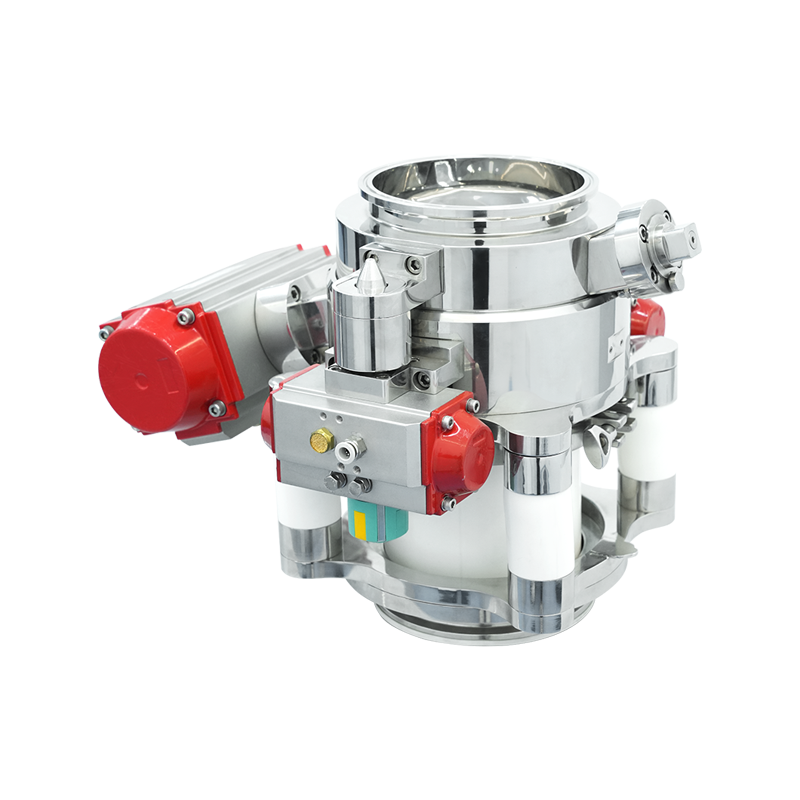
In practice, these interfaces do not live alone. They sit inside an overall containment concept that also covers isolators, transfer bags, and the workflow around them, and it pays to design that concept as a whole rather than buying components one purchase order at a time. Our own containment and aseptic transfer range grew out of exactly that lesson from customer projects.
A Practical Selection Checklist
When a project team asks how to narrow the field quickly, we suggest working through the following sequence. It usually removes most of the wrong options before pricing becomes a distraction.
- Define the fluid, contact time, and temperature range, including any freeze-thaw excursion.
- Fix the working volume and the fill ratio. Mixing bags rarely behave well above roughly eighty percent of nominal volume.
- List the ports you need by function, then remove anything that could be handled upstream or downstream instead.
- Confirm the sterilization dose and the remaining shelf life on delivery, not on the certificate date.
- Review extractables and leachables data against your actual process conditions rather than a generic claim.
- Match the support hardware early: bins, frames, rocker platforms, and lifting aids all influence the bag drawing.
- Agree the documentation package up front, including certificates of analysis, conformity, and irradiation.
- Ask whether shipping and drop validation has been performed on the packed configuration you will actually receive.
Qualification, Testing, and Documentation
Bags are simple objects with a surprisingly long qualification trail. On the film side, expect extractables studies following a recognized protocol, plus biocompatibility data such as USP biological reactivity tests and compliance statements for USP physicochemical testing of plastic materials. Particulate counts matter for any bag destined for a final filter or a bulk fill.
On the assembly side, look at seal integrity, port pull strength, and a validated sterilization cycle with an established sterility assurance level. The shelf-life claim should be supported by ageing data on the finished assembly, not just the film roll. If the bag will be shipped filled, add transport validation with real liquid and real handling.
- Film and assembly drawings with revision control
- Irradiation certificate with dose range per batch
- Extractables and leachables report tied to contact conditions
- Integrity and leak test results, plus the method used
- Shelf-life and ageing summary
Where sterility and containment overlap, the detail is worth the effort. A recent discussion of reducing strain in sterile pharmaceutical and biotech production makes the same point from the operations side: the savings come from fewer interventions, not from cheaper components.
Field Notes: Problems We See Most Often
- Over-pressurizing a two-dimensional bag because a vent filter was wetted or omitted.
- Hanging a filled bag from fittings rather than from the designed lifting points.
- Clamping tubing in a position that traps liquid and quietly reduces the delivered volume.
- Mixing connector genders between suppliers, then discovering it during a campaign.
- Storing irradiated bags in a warm room and losing months of usable shelf life.
- Treating the bag as the whole system while ignoring the bin, the frame, and the transfer step.
Most of these are not film failures. They are interface failures between the bag and everything around it, which is why the specification conversation should involve the people who will actually connect the bag at seven in the morning.
Bioprocessing bags work best when they are treated as one part of a fluid path rather than a standalone purchase. Get the contact layer, the format, and the transfer interface aligned, and the bag becomes the least interesting item in the room, which is precisely what a reliable process should feel like. If you are working through a containment or aseptic transfer project and want a second opinion on how the bag connects to the rest of the line, our team is always glad to talk it through.