

Content
- 1 What Counts as a Pharmaceutical Single Use Bag
- 2 The Main Types of Single Use Bags in Pharmaceutical Production
- 3 Why Bags Replace Cleaning Validation Work
- 4 The Film Matters More Than the Shape
- 5 Where Bags Meet the Rest of the Process
- 6 What Goes Wrong and How to Prevent It
- 7 A Short Checklist Before You Specify a Bag
Anyone who has spent time on an aseptic line knows the moment: a stainless steel container, freshly cleaned and fully documented, is waiting for the powder it is about to carry, and somebody still has to prove on paper that it is clean. Pharmaceutical single use bags became popular largely because they delete that question. Instead of cleaning, validating and re-cleaning a rigid vessel, you bring in a sealed, pre-sterilized bag, use it once, and dispose of it.
We build equipment for sterile production, including transfer ports, valves, containment systems and the bags that work with them, and we have watched the conversation change over the years. A decade ago customers asked whether a bag could really replace a stainless bin. Now they ask which film, which port configuration and which docking interface will keep the bag sterile from the moment it leaves its outer packaging to the moment it is empty.
What Counts as a Pharmaceutical Single Use Bag
In pharmaceutical production, a single use bag is a flexible, pre-sterilized polymer container intended for one batch or one campaign. It usually arrives gamma-irradiated inside protective outer packaging, is passed into the cleanroom through a transfer hatch, and is discarded after use. It is not simply a heavy-duty plastic bag. The film is a multi-layer structure: a product-contact layer chosen for low extractables, a barrier layer that limits gas and moisture permeation, and outer layers that provide mechanical strength and reliable heat sealing.
The distinction that matters most in daily practice is between bags that hold liquids and bags that hold powders. A bioprocess bag sitting in a bioreactor holder has to survive agitation, aeration and temperature control. A powder transfer bag has to survive something quite different: static charge, dust and abrasion from sterile powder, plus the mechanical pull of being docked to a valve or a port.
The Main Types of Single Use Bags in Pharmaceutical Production
Most bags used in pharma fall into a handful of families. The table below is a quick map of what each one does and where it tends to appear.
| Bag type | Typical contents | Where it is used | What to watch |
|---|---|---|---|
| Powder transfer and feeding bag | Sterile API powder, excipients, lactose blends | Dispensing, weighing, storage and feeding into blenders or reactors | Port design and docking interface; dust and static control |
| PE liner bag | Powders, granules, some liquids | Inside drums, containers and transfer trolleys | Film thickness, weld integrity, fit inside the container |
| Bioprocess or bioreactor bag | Media, buffers, cell culture | Single-use bioreactors, mixing and storage systems | Matching the bag to holder geometry and agitation regime |
| Sampling and transport bag | In-process samples, small-volume liquids | QC sampling, movement between rooms or buildings | Sterility of the sampling point and safe handling afterwards |
| RTP beta bag | Powder or liquid entering an isolator | Aseptic transfer through an RTP port on an isolator wall | Flange condition and correct bag positioning on the port |
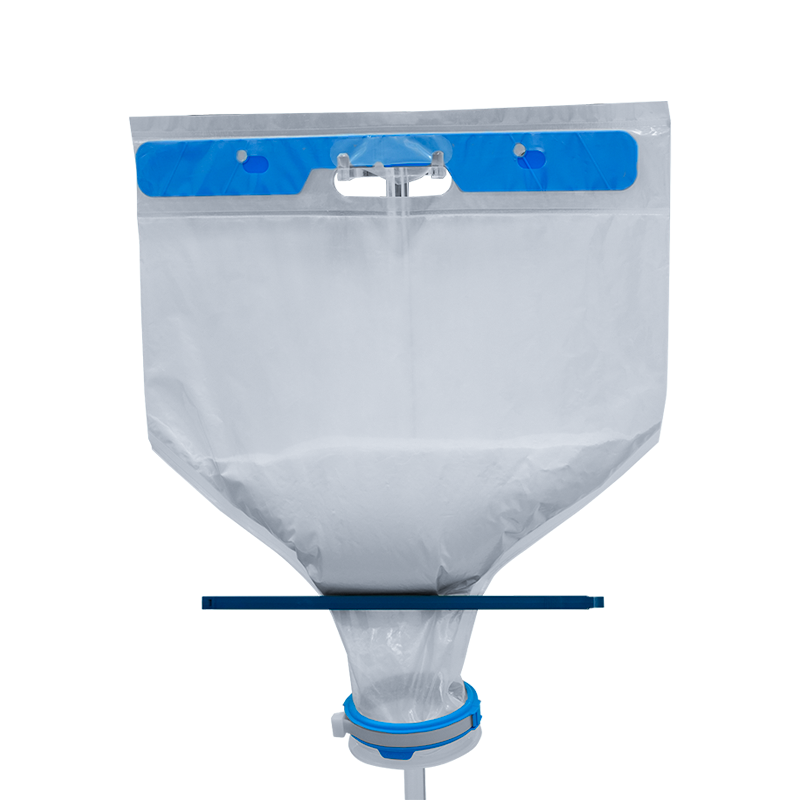
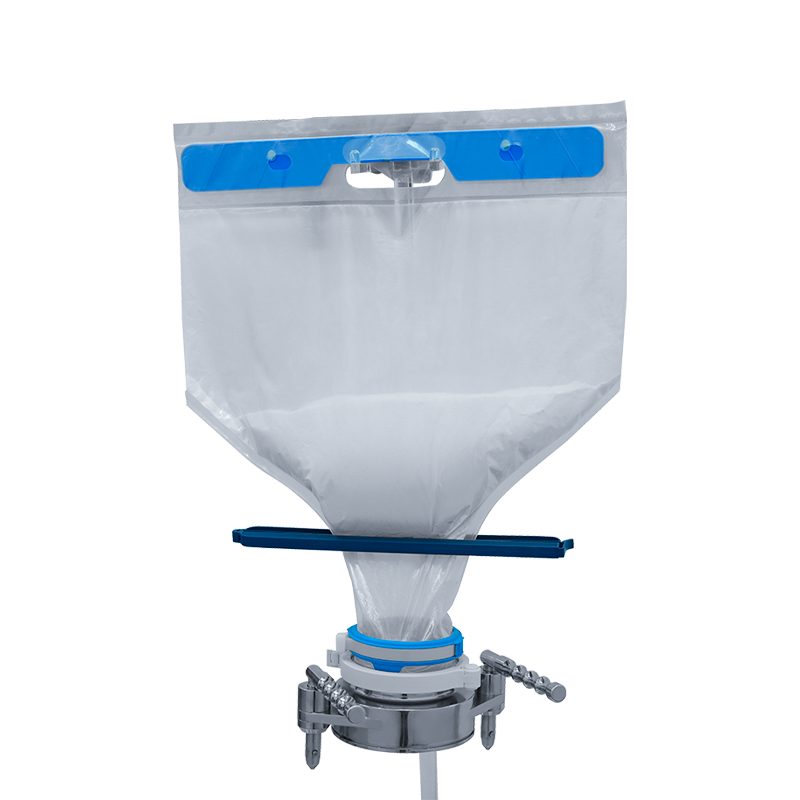
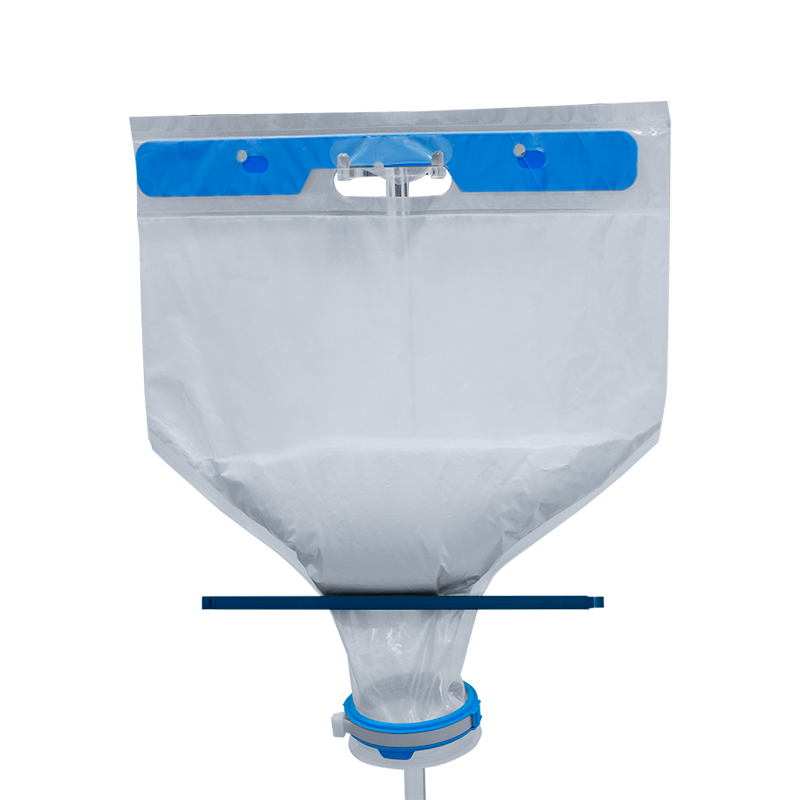
Two of these deserve a closer look, because they are the ones most often specified for solid and powder handling. A disposable sterile powder transport, storage and feeding bag is designed to carry sterile powder through weighing, storage and feeding without exposing it to room air; its film and ports are chosen so that the bag can be docked, emptied and collapsed cleanly. A PE bag plays a simpler but equally useful role, most often as a liner inside a drum, container or transfer trolley, where it protects the material and lets the outer container be reused without a full cleaning cycle.
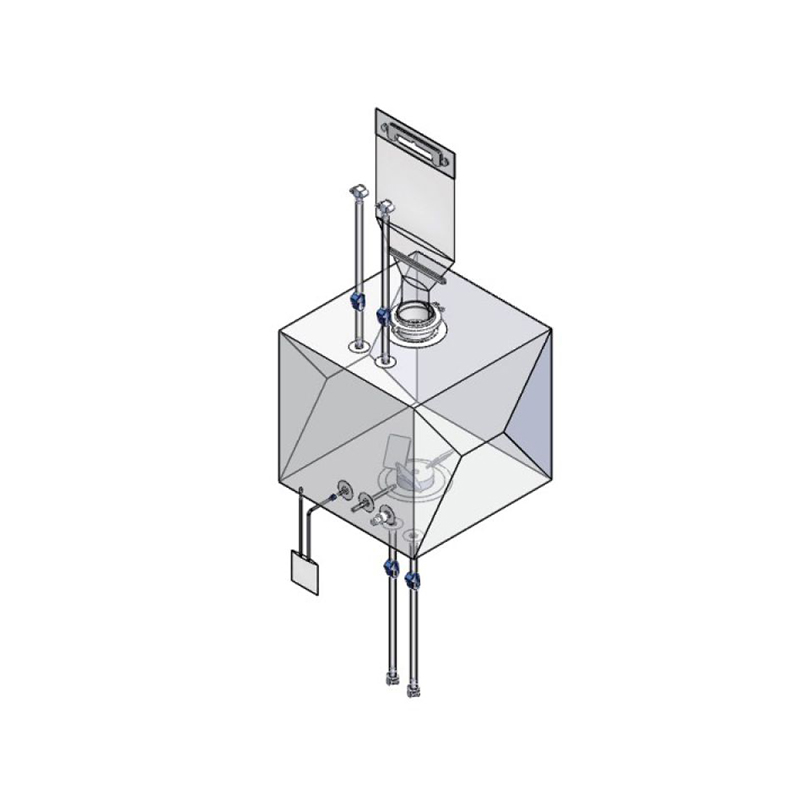 Disposable Sterile Powder Transport, Storage and Feeding BagSingle-use aseptic bag for powder transfer and feeding, available in 3–100 L sizes and suited to reducing cleaning and validation in powder handling.View Product →
  PE Bag for Aseptic Single-Use Powder TransferSterile single-use PE bag used as a liner in drums, containers, or transfer trolleys, helping protect powders and simplify cleaning between uses.View Product →
Why Bags Replace Cleaning Validation Work
The economic argument for single use technology is easy to state and hard to argue with. A stainless vessel that contacts product must be cleaned, and that cleaning must be validated, with rinse water analysis, swab recovery studies, hold-time studies and periodic revalidation. A bag arrives already sterile, with the sterilization dose documented by the supplier.
- No cleaning or sterilization cycle is needed between batches, so changeover time drops sharply.
- Cross-contamination risk between products falls, because nothing is reused.
- Water, detergent and effluent volumes go down, which matters in facilities with limited utilities.
- The equipment footprint is smaller, and buffer or media can be prepared closer to the point of use.
The trade-off is that the bag itself becomes a critical component, with its own documentation, its own failure modes and its own storage requirements. Treating it as an afterthought is where most of the trouble starts.
The Film Matters More Than the Shape
Product-contact layer
The innermost layer is the only part of the bag that touches the product, so it carries the most scrutiny. High purity polyethylene is the usual choice for powder transfer bags because it is chemically inert, weldable and well characterized in terms of extractables. Suppliers should be able to provide a resin specification and a statement of the film's contact-layer composition.
Barrier and structural layers
Around the contact layer sit the layers that give the bag its real-world behaviour: an ethylene vinyl alcohol or polyamide layer where moisture or oxygen protection is needed, tie layers to hold the structure together, and an outer layer that resists abrasion during handling. A thin-looking bag and a thick-looking bag can behave very differently once they are full and suspended.
Ports, tubing and welds
Ports are where film becomes hardware. Each connection point is a weld, and each weld is a potential leak path. Ask how the port welds are inspected, how tubing is sealed, and how the bag is pressure tested or leak tested before release. On powder bags, the port also determines whether the bag can be docked to a valve or a transfer port without forcing the operator to hold the bag in an awkward position.
Where Bags Meet the Rest of the Process
A bag is never used alone. It connects to something: a valve, a port, a container, an isolator wall. That interface is where sterility is won or lost, and it is why bag selection and interface selection should happen in the same conversation. A bag with an elegant film can still compromise a batch if it cannot be docked correctly to the equipment it feeds.
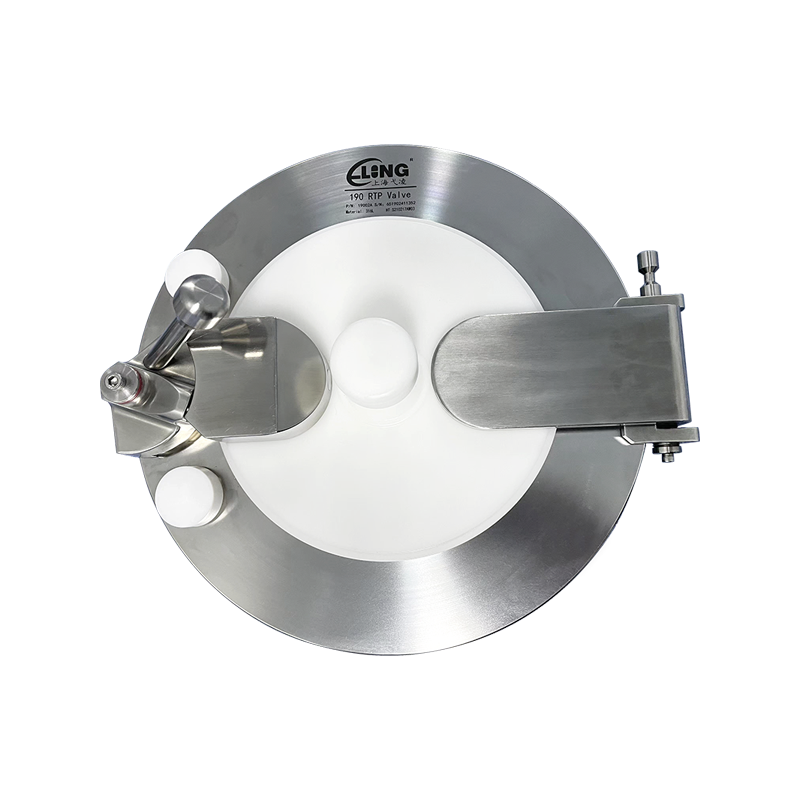
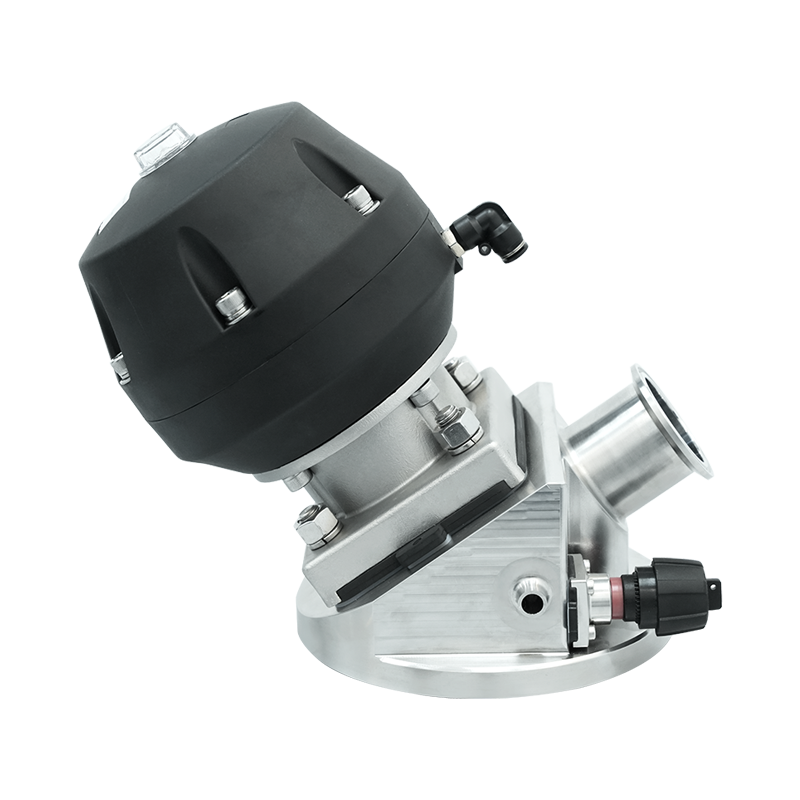
In powder handling, the usual pairing is a single use bag on one side and an aseptic split butterfly valve or a rapid transfer port on the other. Both approaches keep a sterile boundary that closes before the two sides separate, so neither the product nor the operator is exposed. The same principle applies to containment and aseptic transfer systems built around isolators and glove boxes.
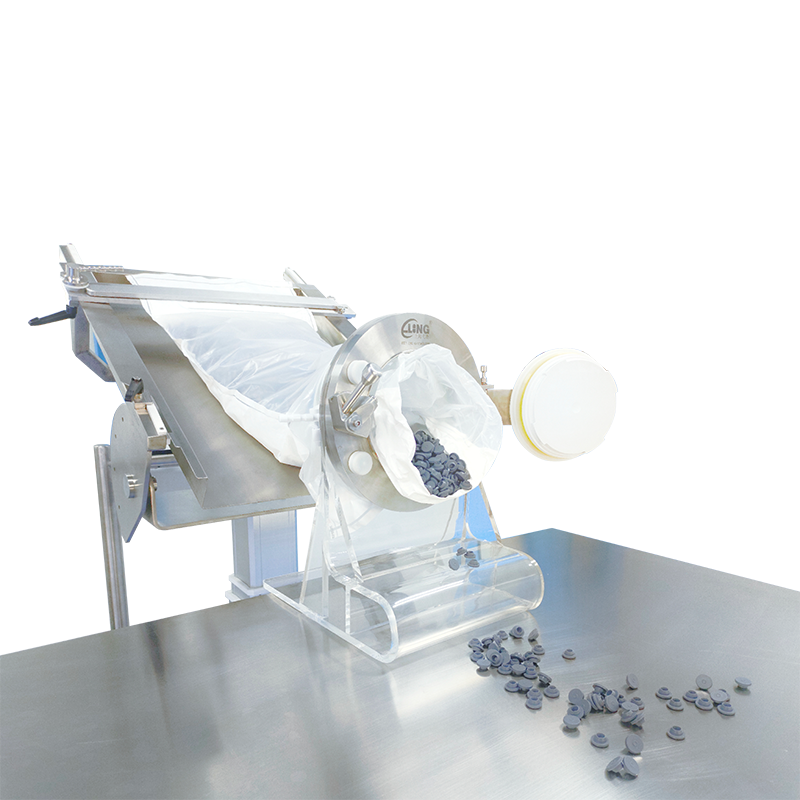
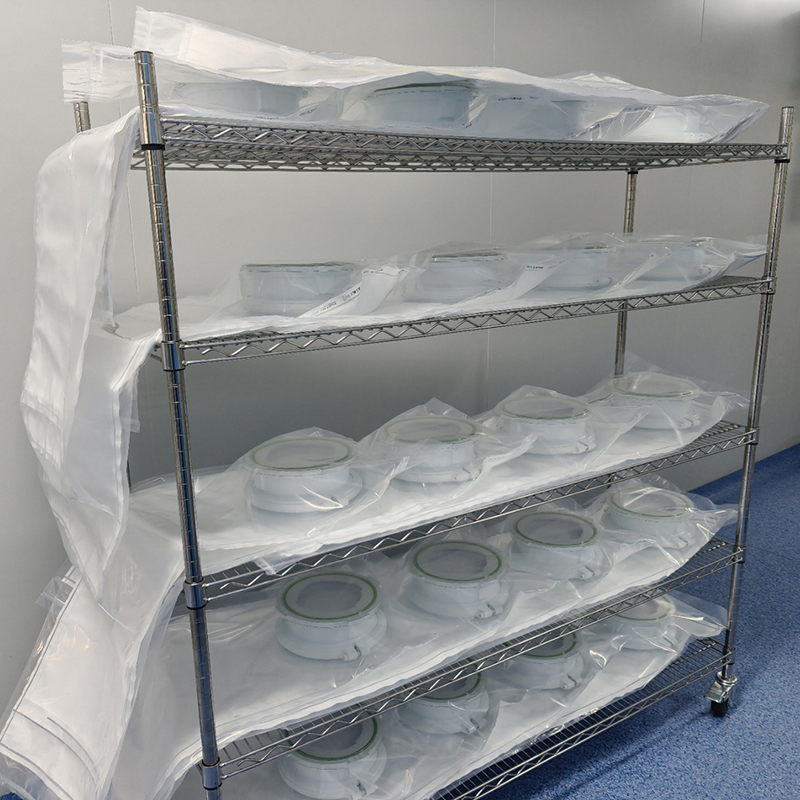 RTP Beta Bag for Aseptic Transfer into IsolatorsSingle-use beta bag that docks with alpha ports to transfer stoppers, caps, and other components into isolators without breaching the sterile boundary.View Product →
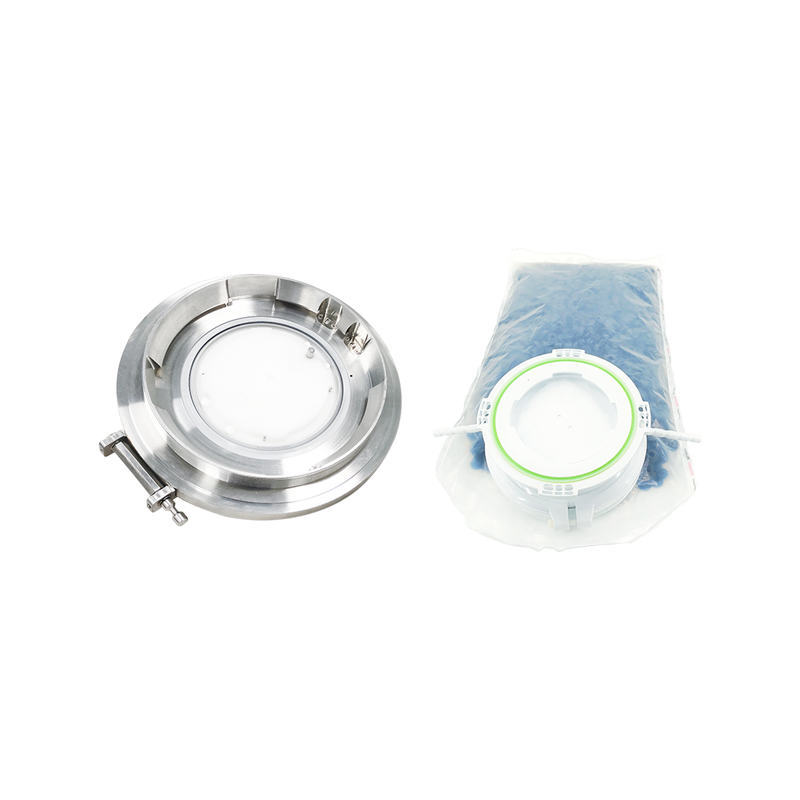
The RTP beta bag is the clearest example of this logic. The bag carries a beta flange that mates with an alpha port mounted on an isolator, a glove box or a piece of process equipment. Product moves through the closed port; the bag is then sealed and removed, and the port is closed again. Getting that sequence right depends on operators being trained on the specific combination of bag and port, not on generic aseptic technique alone.
What Goes Wrong and How to Prevent It
Most bag incidents in our experience are not film failures. They are handling failures, and they cluster around a few familiar patterns.
- Setup and filling performed awkwardly, putting unnecessary strain on the bag or the manifold and creating a weak point.
- Overfilling, which turns a flexible bag into a pressurised vessel with no relief.
- Sharp edges, unpolished welds or protruding fittings on the container the bag sits inside.
- Pinching or trapping of the bag between the container and its lid during closing.
- Storage in an area with temperature swings, UV exposure or rodent risk, which quietly degrades the film.
Most of these come down to time pressure on the operator. We wrote about that pressure in a note on taking the strain out of sterile pharmaceutical and biotech production, and the same logic applies here: a bag that is easy to position correctly is safer than one that requires patience.
A Short Checklist Before You Specify a Bag
- What is going in: free-flowing powder, cohesive powder, granulate, liquid, or a combination?
- What volume, and what is the maximum fill level you are willing to allow operators to reach?
- How does the bag connect: a valve, an RTP port, a hose barb, a sampling valve, or a simple tie-off?
- What sterilization dose and documentation does your quality system expect to see?
- What extractables or leachables limits apply, and has the film been characterized against them?
- How will the bag be physically supported during filling, storage and discharge?
- How will it be stored, and what shelf life does the supplier state?
Single use bags look simple, which is exactly why they are easy to under-specify. The film, the ports and the interface with the rest of the process all have to be chosen together, and the operators who handle the bag every day should be part of that conversation. Get those three things right, and a bag stops being a consumable and starts being a reliable piece of your process equipment.