

Content
- 1 What Makes RTP Valves a Preferred Choice in Industrial Fluid Control?
- 2 Core Design Principles Behind RTP Valve Technology
- 3 Sealing Materials: Matching the Valve to the Medium
- 4 Valve Body Materials and Pressure-Temperature Ratings
- 5 Actuator Options and Fail-Safe Configurations
- 6 Key Industrial Applications of RTP Valves
- 7 Installation, Maintenance, and Troubleshooting Best Practices
- 8 Evaluating RTP Valve Suppliers and Quality Standards
What Makes RTP Valves a Preferred Choice in Industrial Fluid Control?
In modern industrial systems, the reliability and precision of fluid control components can make or break operational efficiency. Among the many valve technologies available today, the RTP valve — commonly known as the Return-to-Position Valve or Resilient-seated Tight-sealing Pressure valve — has earned a strong reputation across sectors ranging from chemical processing to water treatment and oil & gas. Its combination of elastic sealing, automatic reset capability, and robust construction addresses the most demanding requirements in fluid management, making it one of the most versatile and dependable valve types on the market.
Understanding what sets RTP valves apart requires a closer look at their core design principles, material choices, operating mechanisms, and real-world applications. This article explores each of these dimensions in depth, offering engineers, procurement professionals, and plant managers a comprehensive guide to evaluating and deploying RTP valves effectively.
Core Design Principles Behind RTP Valve Technology
The defining characteristic of an RTP valve is its resilient-seated sealing mechanism. Unlike metal-to-metal seat valves that rely on high contact pressure for sealing, RTP valves use elastomeric or polymer-based seat materials that conform tightly to the valve disc or plug. This contact geometry ensures a bubble-tight seal even at relatively low closing torques, which reduces actuator wear and extends the service life of the entire assembly.
The return-to-position functionality is achieved through an integrated spring mechanism or a pneumatic/hydraulic actuator with a fail-safe return system. When the driving energy source is interrupted — whether due to power failure, signal loss, or emergency shutdown — the valve automatically returns to its pre-configured safe position, either fully open or fully closed. This feature is critical in processes where uncontrolled flow can lead to equipment damage, environmental hazards, or personnel safety risks.
Another important design feature is the modular architecture. RTP valves are typically engineered for easy field servicing, with replaceable seat inserts and packing glands that can be swapped without removing the valve body from the pipeline. This significantly reduces maintenance downtime and total cost of ownership over the valve's operational life.
Sealing Materials: Matching the Valve to the Medium
One of the most critical decisions in specifying an RTP valve is selecting the appropriate sealing material. The seat and seal must be chemically compatible with the process medium, capable of withstanding operating temperatures and pressures, and durable enough to maintain zero-leakage performance over thousands of cycles. The most commonly used materials include:
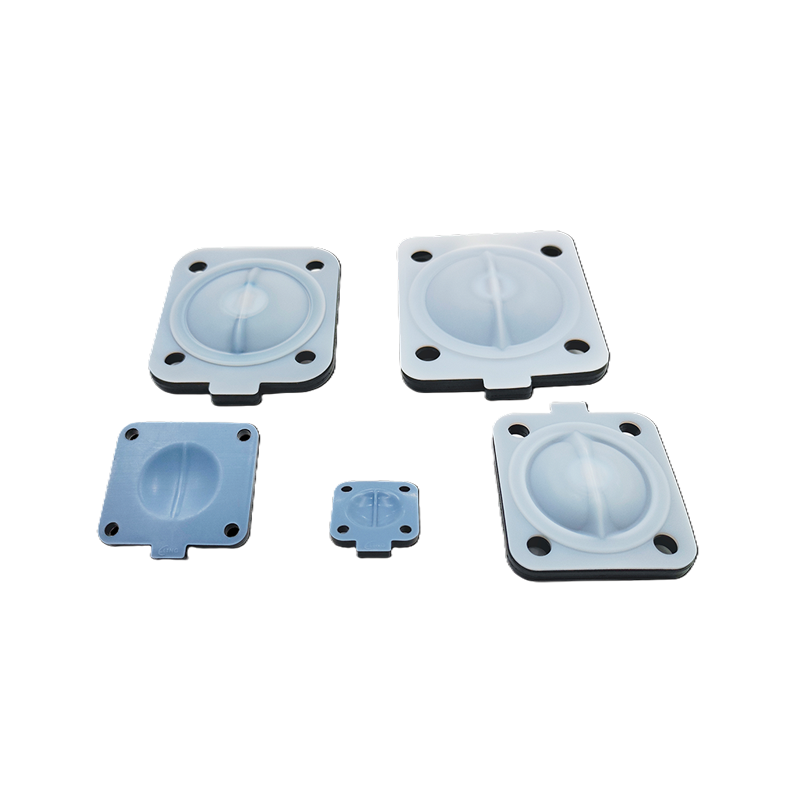
- PTFE (Polytetrafluoroethylene): Offers exceptional chemical resistance against acids, alkalis, solvents, and oxidizing agents. Suitable for temperatures up to approximately 200°C. Ideal for pharmaceutical, chemical, and food processing applications where purity and corrosion resistance are paramount.
- EPDM (Ethylene Propylene Diene Monomer): Excellent resistance to water, steam, and many polar solvents. Commonly used in water treatment, HVAC systems, and general utility services. Not recommended for petroleum-based media.
- NBR (Nitrile Butadiene Rubber): Preferred for oil and gas applications due to its strong resistance to petroleum products, hydraulic fluids, and aliphatic hydrocarbons. Operates effectively in temperature ranges from -40°C to 120°C.
- FKM (Viton): Provides high-temperature resistance up to 200°C and excellent compatibility with aggressive chemicals including aromatic hydrocarbons and chlorinated solvents. Often chosen for demanding upstream oil and gas environments.
Choosing the wrong sealing material is one of the most common causes of premature valve failure. Always cross-reference the process medium's chemical properties, temperature profile, and pressure rating against the manufacturer's compatibility charts before finalizing a specification.
Valve Body Materials and Pressure-Temperature Ratings
The structural integrity of an RTP valve depends heavily on the body material selected. Different industries and applications impose unique demands on pressure ratings, temperature thresholds, and corrosion resistance. The table below summarizes the most commonly available body materials and their typical application domains:
| Body Material | Max Pressure (typical) | Temperature Range | Typical Applications |
| Carbon Steel | PN40 / Class 300 | -29°C to 425°C | Oil & gas, steam systems |
| Stainless Steel 316 | PN40 / Class 300 | -196°C to 400°C | Chemical, pharmaceutical, food |
| Cast Iron | PN16 / Class 125 | -10°C to 300°C | Water treatment, HVAC |
| Ductile Iron | PN25 / Class 150 | -20°C to 350°C | Municipal water, fire protection |
When specifying body material, engineers should also consider wall thickness standards (such as ASME B16.34 or EN 12516), end connection types (flanged, wafer, threaded, or butt-weld), and the potential need for external coatings or linings in highly corrosive environments.
Actuator Options and Fail-Safe Configurations
The return-to-position capability of an RTP valve is directly tied to its actuator design. Depending on the process requirements, several actuator configurations are available:
Spring-Return Pneumatic Actuators
This is the most widely used fail-safe configuration. A compressed spring stores mechanical energy and releases it to drive the valve to its safe position when air supply is lost. Fail-closed (FC) or fail-open (FO) configurations are selected based on process safety analysis. Spring-return actuators are simple, reliable, and do not require an external energy source for the fail-safe action, making them suitable for remote or unmanned installations.
Double-Acting Pneumatic Actuators with Solenoid Override
In applications requiring faster stroking speeds or higher torque outputs, double-acting actuators powered by instrument air on both sides of the piston offer greater force. A solenoid valve is used to control air routing, and a dedicated fail-safe accumulator tank can be added to provide emergency actuation capacity in case of supply line failure.
Electric Actuators with Battery Backup
Where instrument air is not available or practical, electric actuators paired with uninterruptible power supplies (UPS) or integrated battery packs deliver the return-to-position function electrically. Modern smart electric actuators also offer position feedback, torque monitoring, and fieldbus communication (HART, Modbus, PROFIBUS), enabling full integration into digital plant control architectures.
Key Industrial Applications of RTP Valves
RTP valves serve a broad spectrum of industries. Their adaptability in terms of materials, sizes, and actuation methods makes them suitable for applications as varied as:
- Chemical Processing: Handling aggressive acids, bases, and solvents where zero leakage is non-negotiable for environmental compliance and worker safety.
- Water and Wastewater Treatment: Controlling flow in filtration, disinfection, and sludge handling systems where reliability over long unattended operating periods is essential.
- Oil and Gas: Emergency shutdown (ESD) systems, wellhead control, and pipeline isolation where fail-safe return action is mandated by safety regulations (IEC 61511, SIL standards).
- Pharmaceutical and Food & Beverage: Hygienic service lines where PTFE-seated, stainless steel body valves meet FDA and EHEDG cleanliness standards.
- HVAC and Building Services: Chilled water, heating circuits, and fire suppression systems where compact valve dimensions are needed for installation in tight mechanical rooms.
Installation, Maintenance, and Troubleshooting Best Practices
Proper installation is the foundation of long-term RTP valve performance. Always ensure the pipeline is flushed and free of weld slag, scale, or debris before installing the valve, as particulate contamination is a primary cause of seat damage and leakage. Verify that the valve's pressure and temperature ratings match the worst-case operating conditions, including surge pressures and thermal excursions.
During routine maintenance, inspect the seat insert for signs of wear, deformation, or chemical attack at intervals recommended by the manufacturer — typically every 12 to 24 months depending on cycle frequency and media aggressiveness. Replace packing and O-rings during each scheduled maintenance window even if they show no visible defects, as elastomers undergo compression set over time and may fail without warning.
Common troubleshooting scenarios include valve failure to close fully (often caused by foreign matter trapped under the seat), excessive actuator torque demand (indicating seat swell from chemical incompatibility), and slow stroking speed (frequently linked to restrictions in the pneumatic supply line or solenoid valve malfunction). Addressing these issues promptly prevents escalation into unplanned shutdowns and costly emergency repairs.
Evaluating RTP Valve Suppliers and Quality Standards
When sourcing RTP valves, look for manufacturers who comply with recognized international standards such as ISO 9001 for quality management, API 598 or EN 12266 for valve testing, and ATEX or IECEx certification for actuators used in explosive atmospheres. Third-party fire testing to API 607 or ISO 10497 is essential for valves deployed in hydrocarbon services.
Request factory acceptance test (FAT) documentation, material traceability certificates, and cycle life test data before finalizing a purchase. Reputable suppliers will also provide application engineering support to help specify the correct valve configuration for your process, reducing the risk of mis-application and early failure. Investing time in supplier evaluation upfront delivers significant dividends in reliability, safety, and lifecycle cost performance.